Ceramic Braces: The Honest Guide to Benefits, Drawbacks, and Value
See ceramic and metal brackets side by side at a free consultation, with exact pricing for your plan.
Here’s the short version: ceramic braces work exactly like metal braces, just with tooth-colored brackets that blend into your smile. For many teens and adults, they hit the sweet spot between results and discretion. For some, they’re not the best fit.
We’ve placed thousands of brackets at Blue Ridge Orthodontics, both metal and ceramic. Here’s what we tell patients when they ask us straight out whether ceramic braces are worth it.
What Are Ceramic Braces?
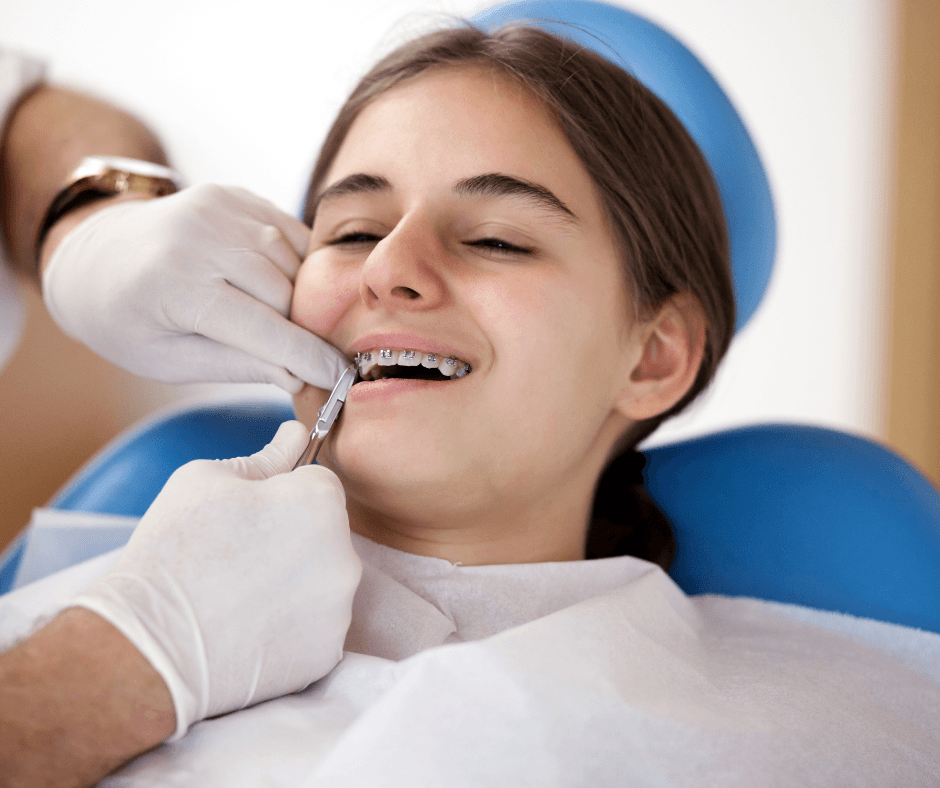
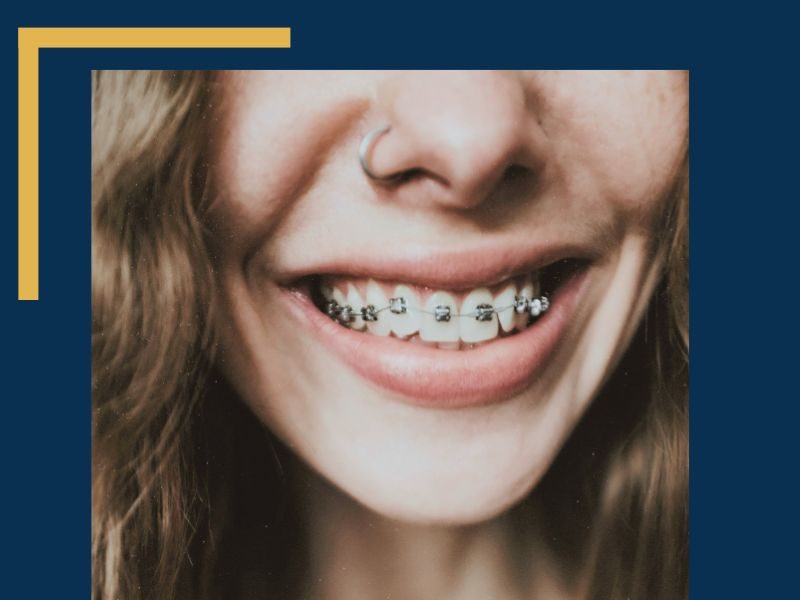
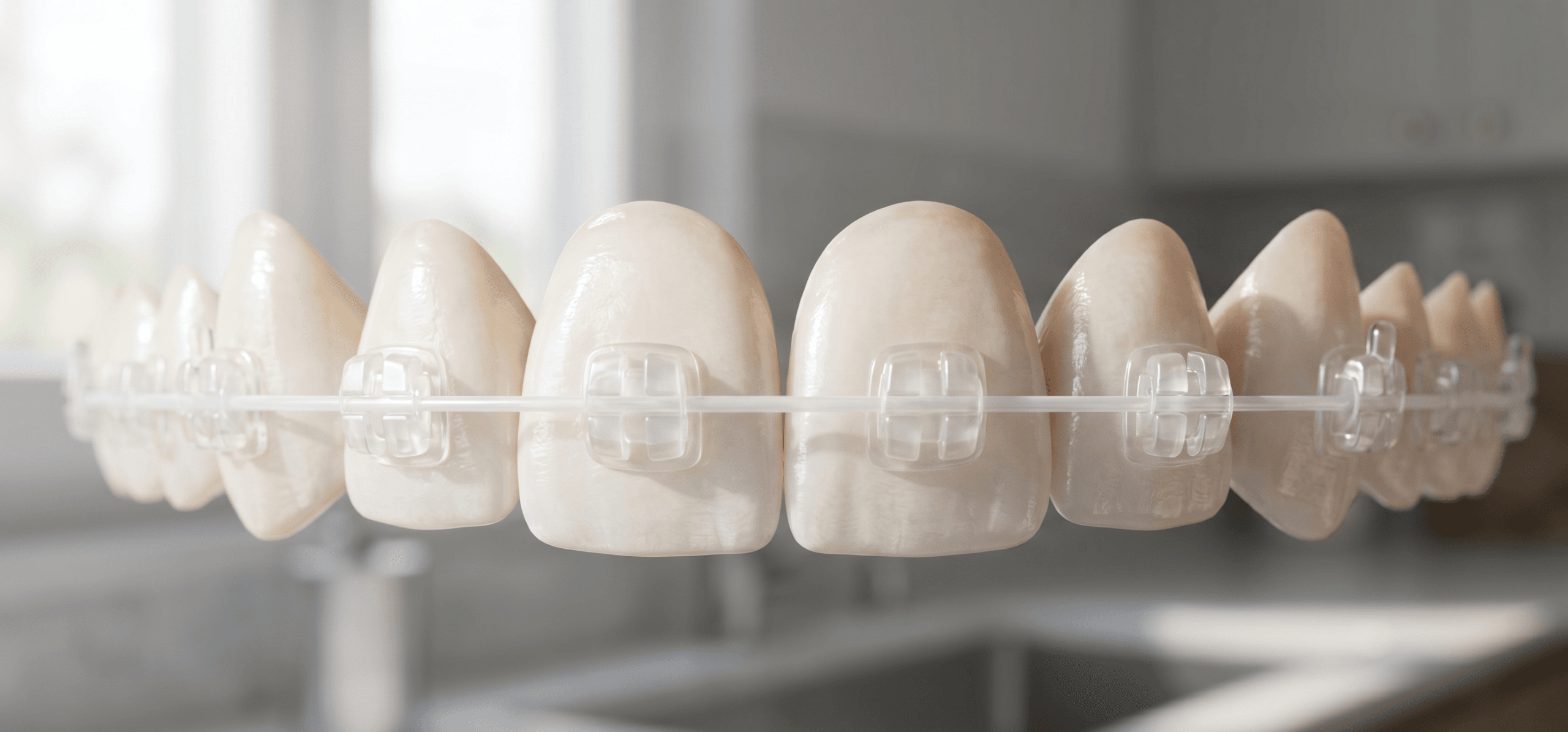
Ceramic braces (sometimes called clear braces or porcelain braces) use brackets made of a translucent or tooth-colored ceramic instead of stainless steel. The wires and the way they move teeth are the same as traditional braces. What changes is how noticeable they are.
The Benefits of Ceramic Braces
They Blend In
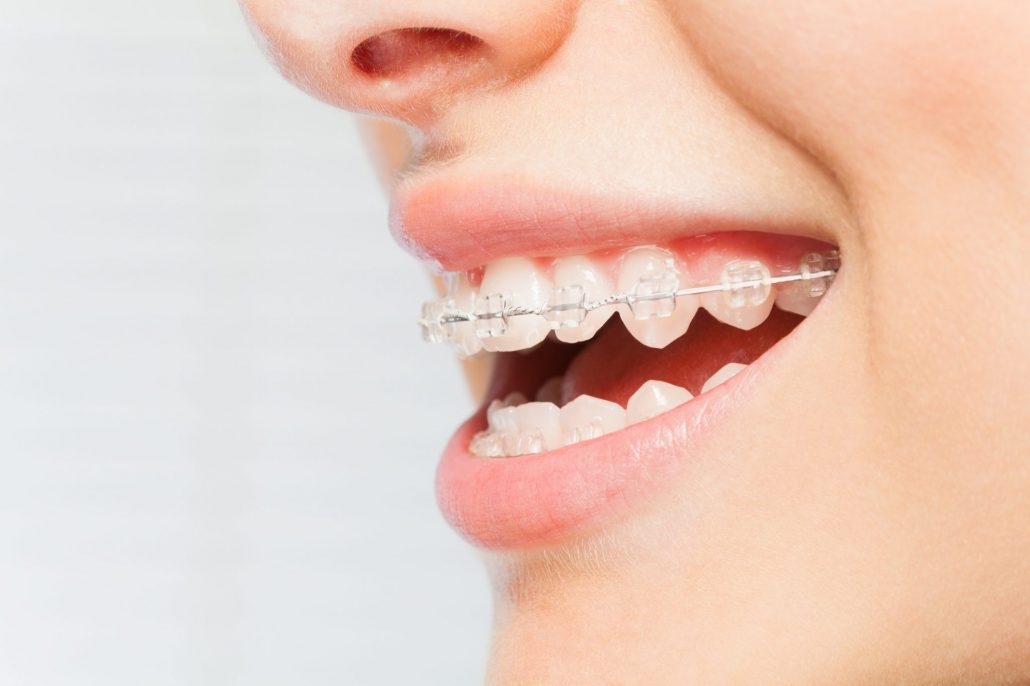
This is the headline. From conversational distance, ceramic brackets are hard to spot, especially with clear or white ties. Photos, meetings, and first dates feel a lot less self-conscious.
They Treat Complex Cases
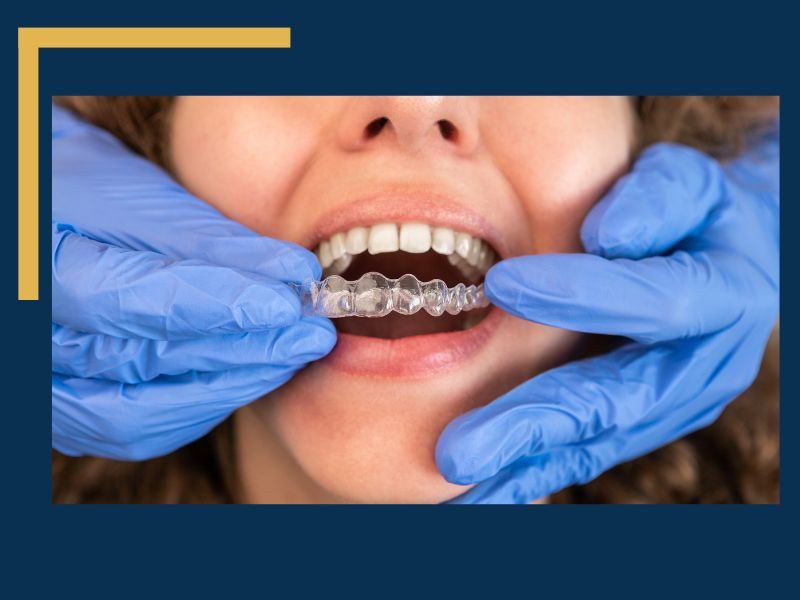
Clear aligners are fantastic, but some bite problems respond best to fixed brackets. Ceramic braces give you that full correction power without a mouth full of metal.
No Compliance Worries
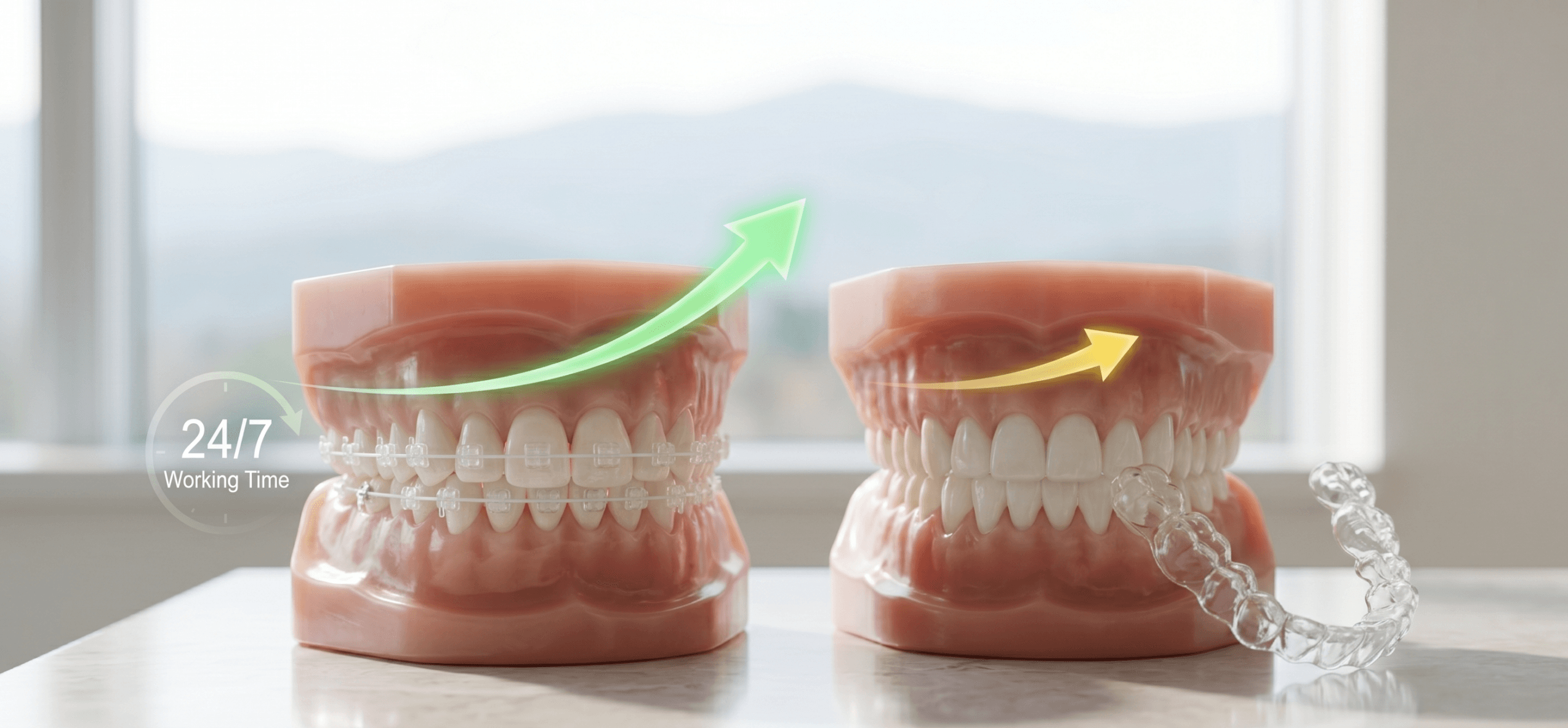
Aligners only work when you wear them 20–22 hours a day. Ceramic braces are always on the job. For busy adults and forgetful teens alike, that reliability matters.
Resistant to Staining
Modern ceramic brackets resist discoloration well. The elastic ties can stain, but we replace those at every visit.
Comfortable
Today’s ceramic brackets have smooth, rounded edges. Most patients find them no less comfortable than metal.
The Drawbacks (Because Every Option Has Some)
We won’t pretend ceramic is perfect.
They’re larger. Ceramic brackets are slightly bigger than metal ones because ceramic is more brittle than steel and needs the extra bulk.
They can be more fragile. Ceramic is strong, but a hard crunch can chip a bracket. Avoiding hard foods matters even more.
Treatment may run a bit longer. Some cases take slightly longer due to friction between the bracket and wire. We plan for this upfront.
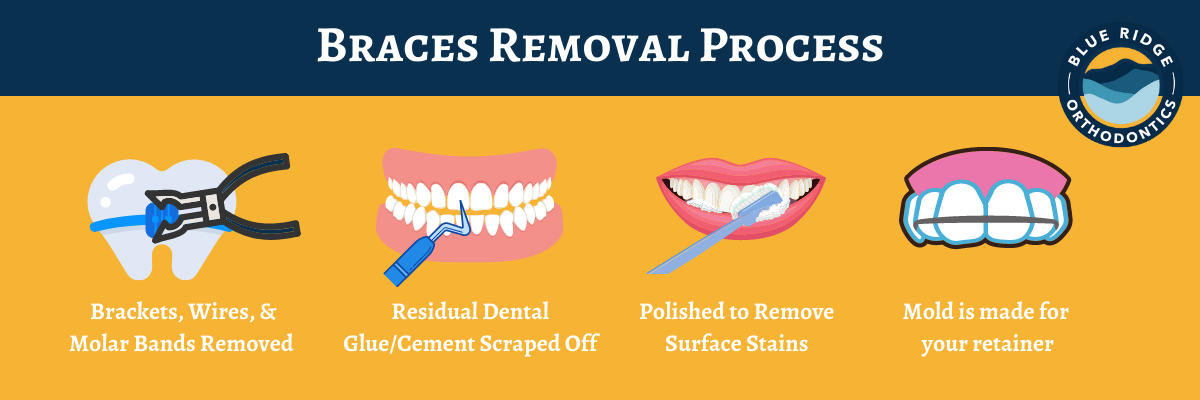
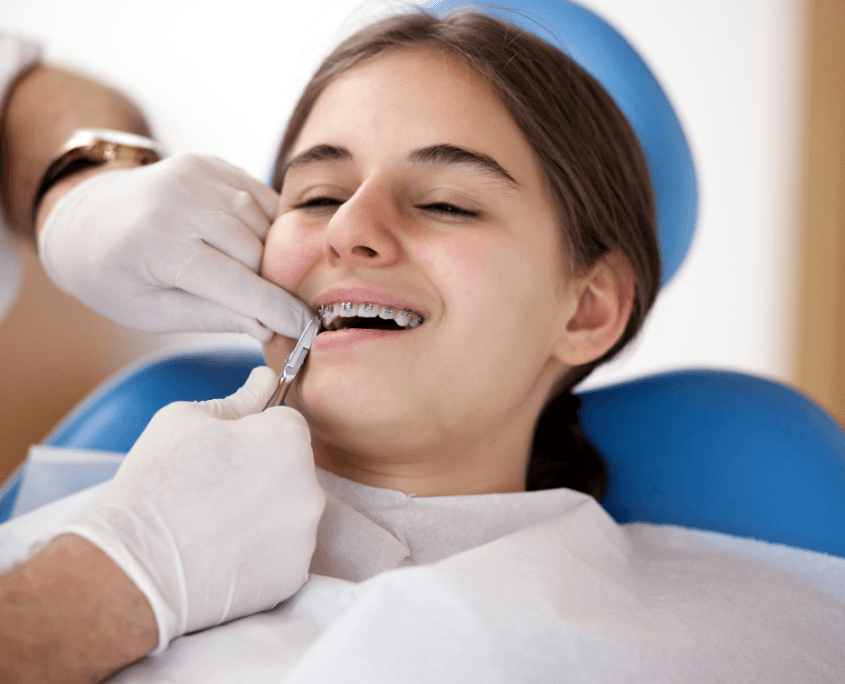
Removal takes extra care. We take our time when brackets come off to protect your enamel.
Scorecard
Ceramic vs. Metal Braces at a Glance
Ceramic
Metal
Ceramic
Metal
Ceramic
Metal
Ceramic
Metal
Ceramic
Metal
Scores reflect our team’s general clinical experience. Your orthodontist will recommend what fits your bite.
Ceramic vs. Metal vs. Invisalign
| Factor | Ceramic braces | Metal braces | Invisalign |
|---|---|---|---|
| Visibility | Low | High | Very low |
| Handles complex bites | Yes | Yes | Most cases |
| Removable | No | No | Yes |
| Durability | Good | Excellent | Trays replaced regularly |
| Food restrictions | Yes | Yes | None (remove to eat) |
| Best for | Image-conscious teens and adults | Kids, athletes, budget-focused families | Disciplined teens and adults |
Want a deeper side-by-side? Read our metal vs. ceramic braces comparison or explore all our braces options.
Are Ceramic Braces Worth It?
Our verdict: ceramic braces are worth it if you need fixed braces and appearance matters to you. That describes a lot of adult orthodontic patients and older teens.
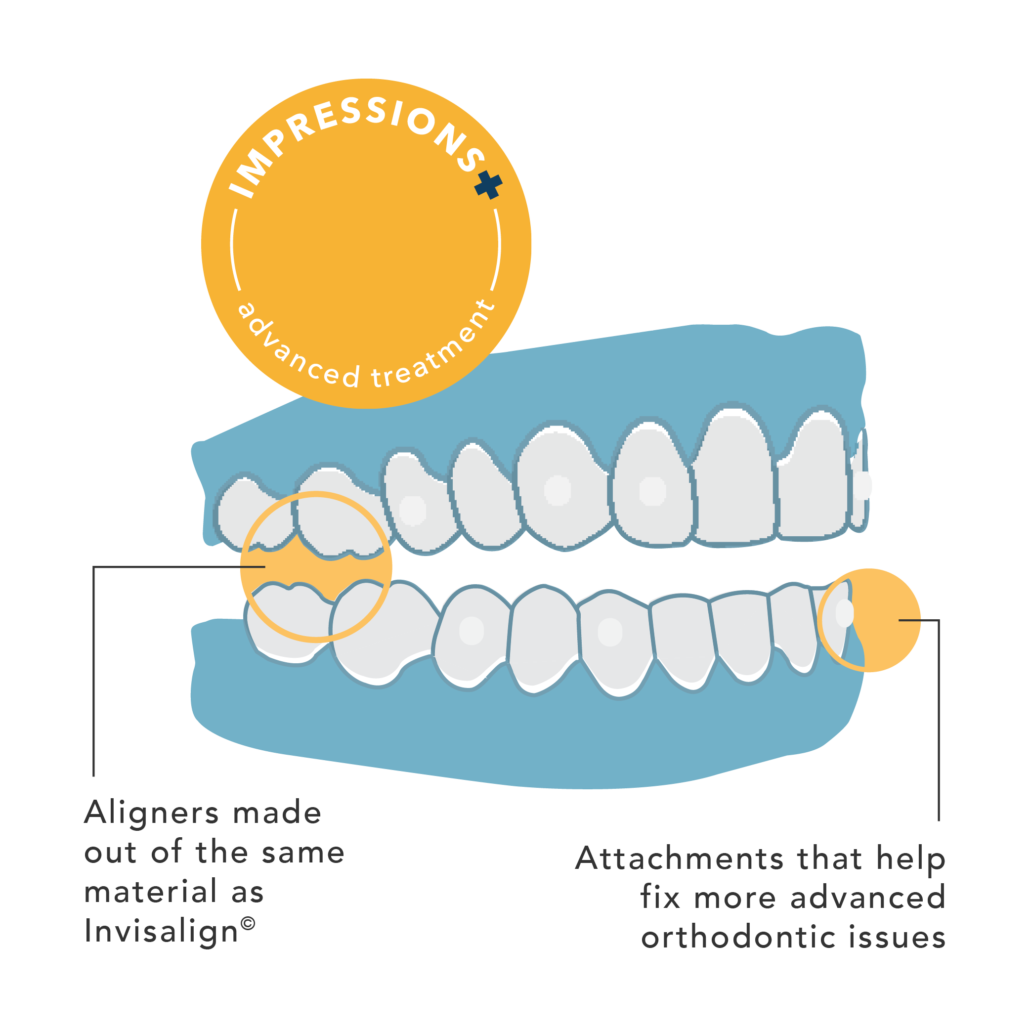
They may not be worth it if you play contact sports without a mouthguard, love crunchy foods and won’t give them up, or would be happy wearing removable aligners. In that last case, Invisalign may suit you better. As a Diamond+ Invisalign provider, we treat many cases other offices send to braces.

How Much Do Ceramic Braces Cost?
Ceramic braces often cost somewhat more than metal braces at many practices, because the brackets cost more to make. Your actual price depends on your bite, your treatment time, and your insurance. We explain exact numbers at your free consultation. See our cost and financing page for payment plans, insurance, and our military discount.
Caring for Ceramic Braces
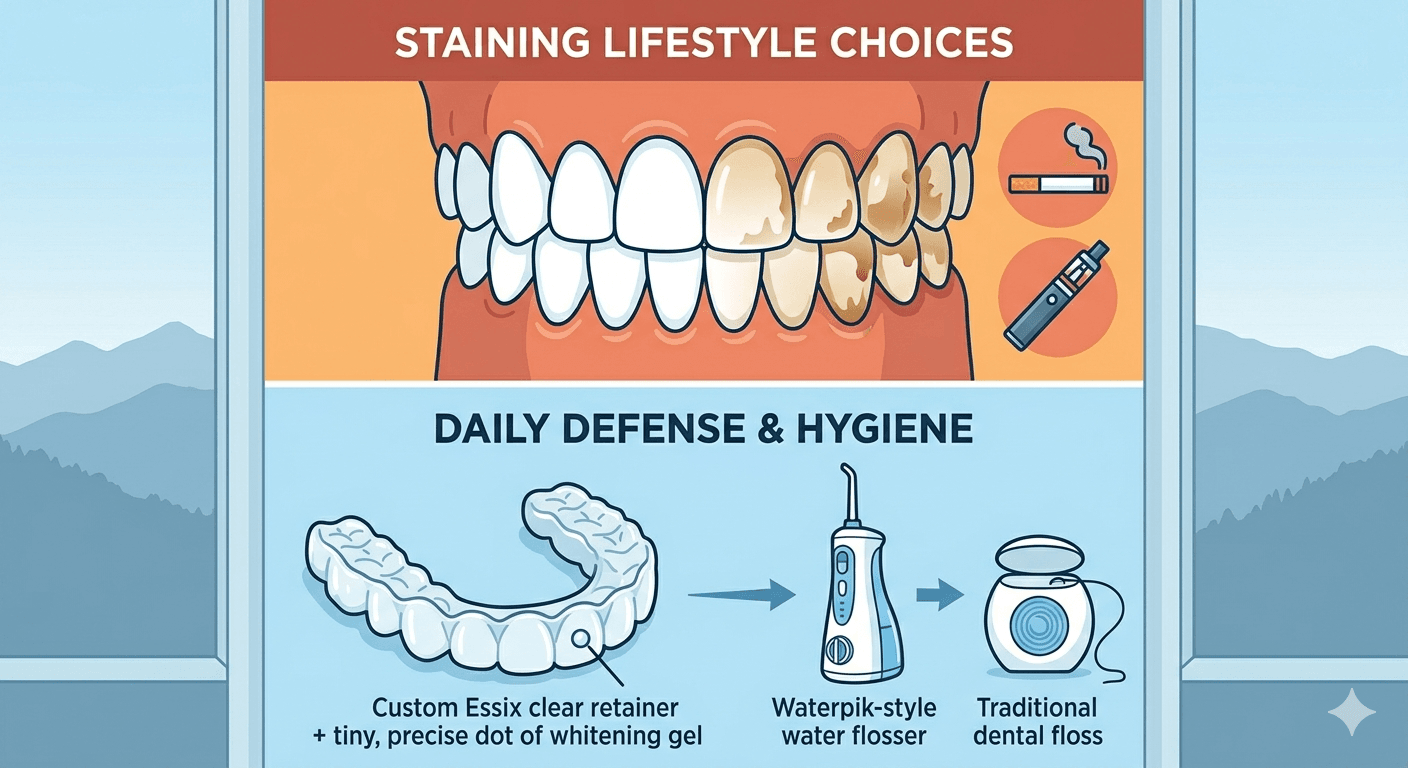
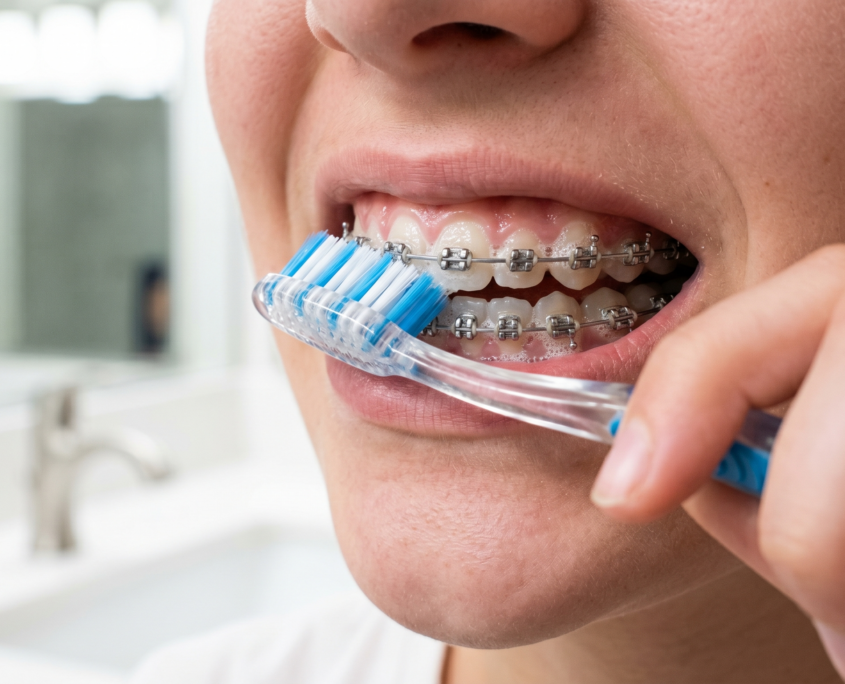
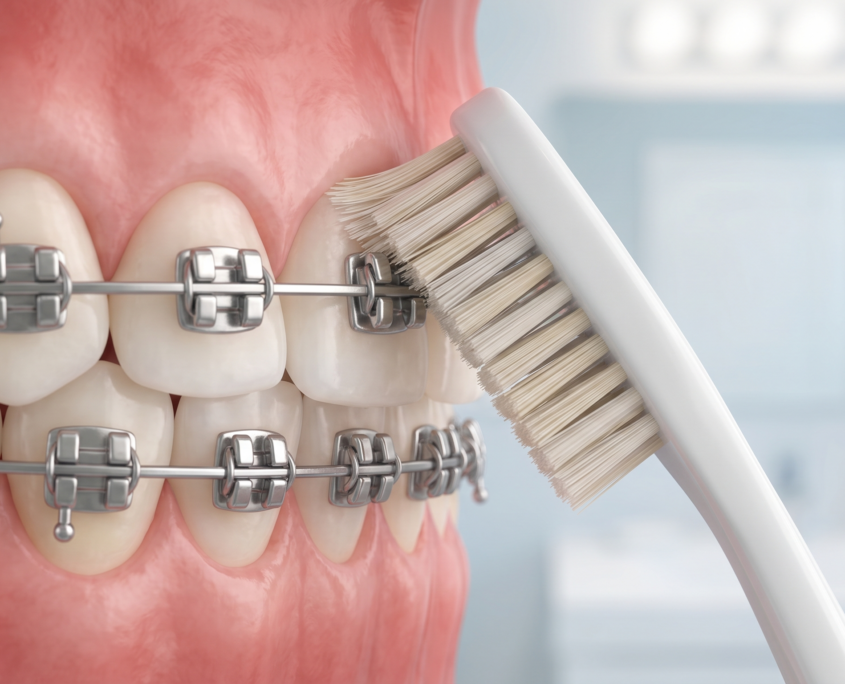
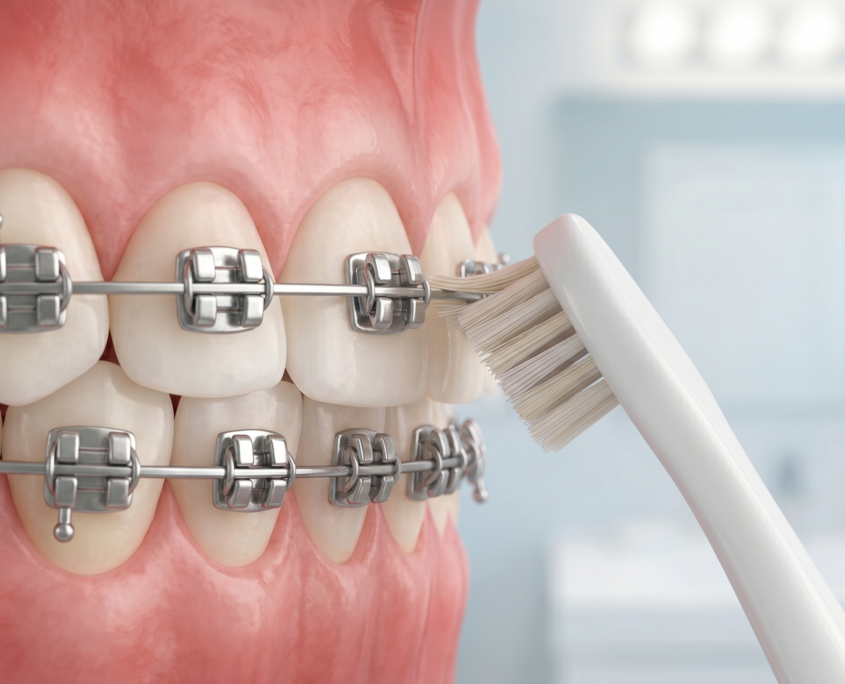
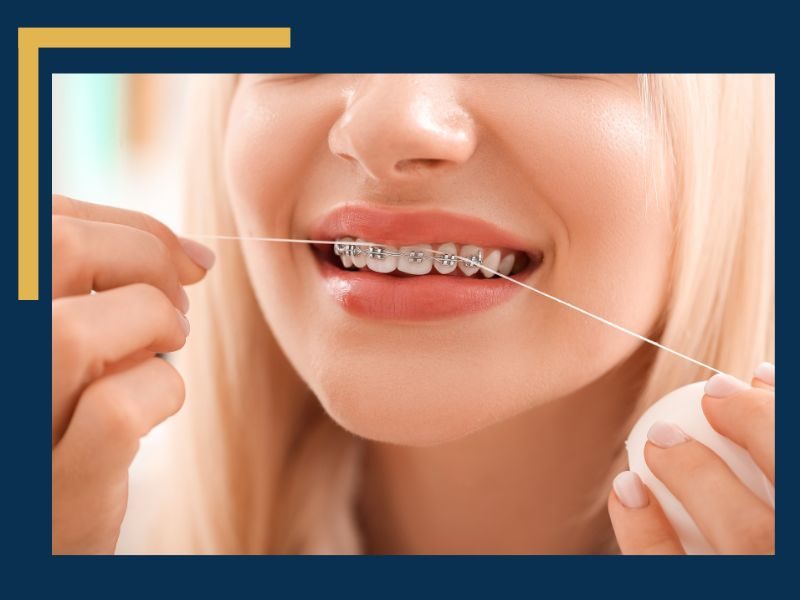
Keep them looking clear with a few habits. Rinse after coffee, tea, red wine, and curry. Brush after meals. Clean between teeth daily using floss made for braces. If you like colored ties, pick light or clear shades. Dark ones can defeat the purpose, though our blue braces guide covers when a soft blue still works.
Frequently Asked Questions
Do ceramic braces stain?
The brackets themselves resist staining. The elastic ties can discolor, but we replace them at each adjustment.
Are ceramic braces as effective as metal braces?
Yes. They move teeth using the same wires and forces. Some cases take slightly longer.
Do ceramic braces hurt more?
No. Soreness after adjustments feels the same as with metal braces.
Can kids get ceramic braces?
They can, but younger kids often do better with metal because it’s more durable. We’ll recommend what fits your child.
See If Ceramic Braces Are Right for You
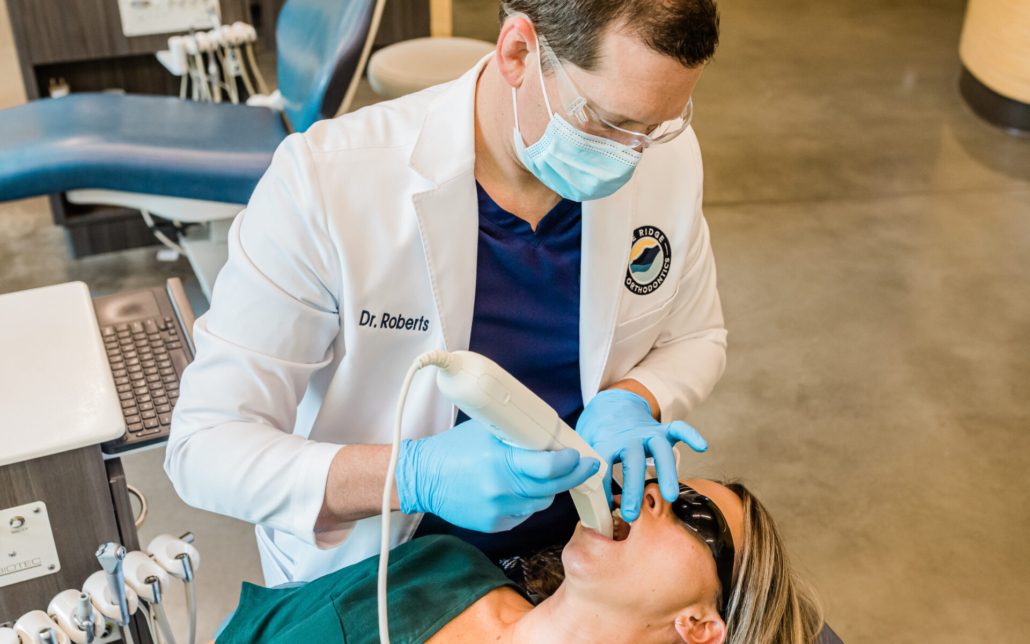
The only way to know for sure is an exam. Schedule a complimentary consultation in Asheville, Hendersonville, or Brevard. We’ll show you ceramic and metal brackets side by side and help you decide with confidence.