Posts

What to Eat with Braces: The Ultimate Braces-Friendly Food Guide

So, you’ve just left the orthodontist’s office with a shiny new set of braces. Your mouth might feel a little crowded, and your teeth could be tender—that’s totally normal! Whether you’re a teen figuring out school lunches or an adult adjusting to braces for the first time, the first few days can take some getting used to.

This guide isn’t just another “don’t eat this” list. We’re here to help you understand why certain foods matter, how to ease discomfort with the right nutrition, and how to keep your braces in great shape so you can reach your “Debonding Day” as quickly as possible.

Happy Smile

The First 72 Hours: Managing Soreness

Right after getting your braces or following a major adjustment, your teeth are starting the process of “bone remodeling.” This is when the wires apply gentle, constant pressure to move your teeth, which can cause some temporary soreness.

During these first three days, keep this mantra in mind: If you have to chew it, skip it.

Top 5 Foods for the First Week

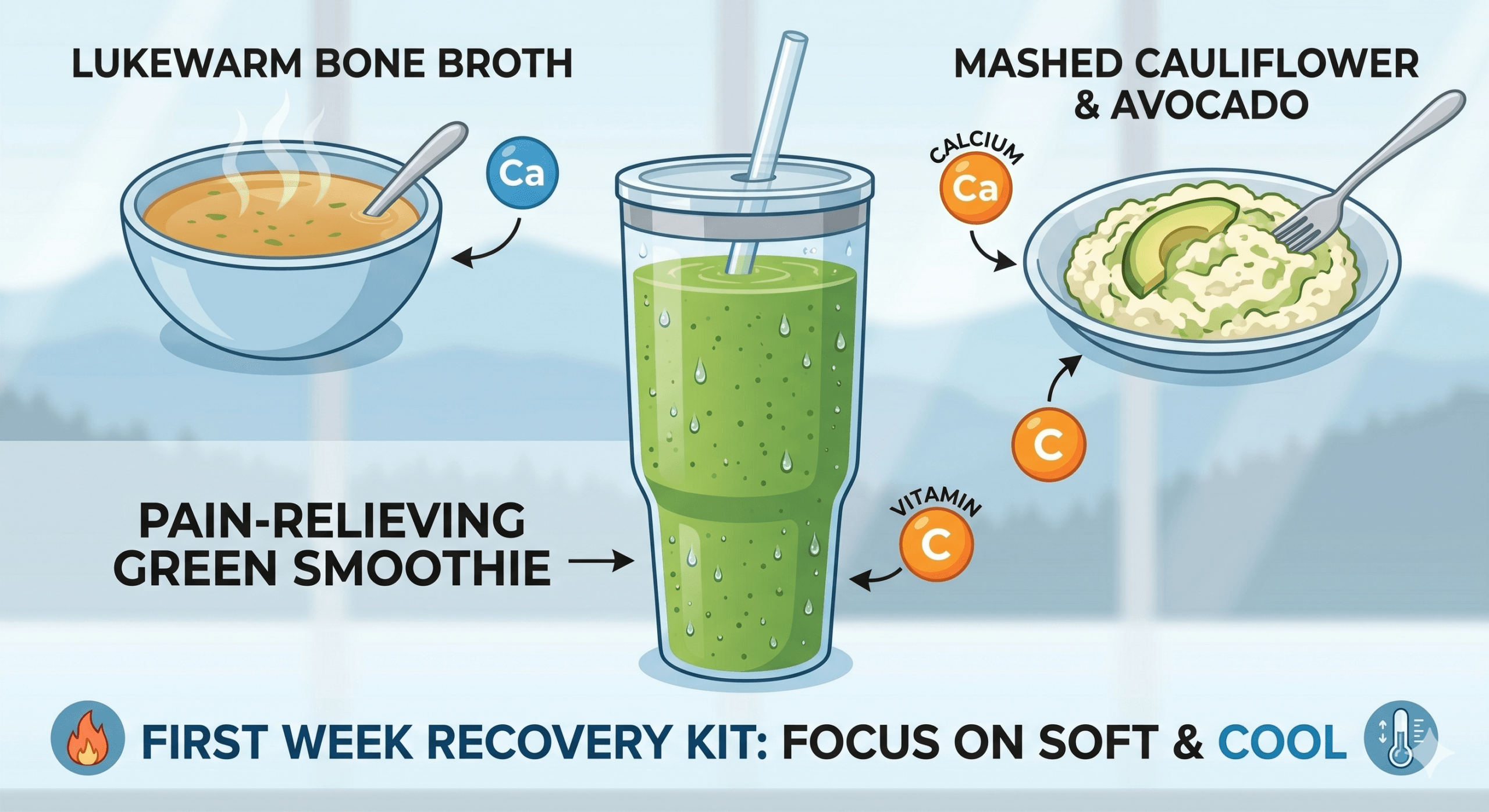
  1. Protein-Packed Smoothies
    Cold smoothies not only taste great but also act like a natural ice pack for your gums, reducing inflammation.

  2. Mashed Potatoes or Cauliflower
    These soft, comforting carbs are filling and easy to eat without putting pressure on your teeth.

  3. Greek Yogurt or Pudding
    Packed with calcium, these are great for supporting your jawbone as it adjusts to your braces.

  4. Bone Broth or Lukewarm Soups
    Warm (not hot!) soups are soothing and full of nutrients to keep you energized.

  5. Scrambled Eggs
    Soft, protein-rich, and easy to eat—eggs are a braces-friendly breakfast or snack option.


What to Eat vs. What to Avoid

Recommended food after braces

To keep your braces working properly, it’s important to protect the bond between your teeth and the brackets. If a bracket breaks, your tooth stops moving in the right direction, which can delay your treatment.

Braces-Friendly Food Reference Table

Food CategoryThe “Safe” List (Eat This)The “Danger” List (Avoid This)Why?
Grains & BreadsSoft tortillas, pancakes, muffins (no nuts), cooked pasta, couscous.Hard pizza crusts, crusty sourdough, bagels, crunchy taco shells.Hard crusts can “shear” brackets off the teeth.
ProteinsMeatloaf, deli meats, slow-cooked chicken, fish, tofu.Beef jerky, ribs (unless cut off bone), wings (unless cut off bone).Biting into bone or tough fibers pulls on wires.
Fruits & VeggiesBananas, steamed carrots, mashed avocado, applesauce.Raw carrots, whole apples, corn on the cob, celery.Biting into hard produce is the #1 cause of broken front brackets.
SnacksSoft crackers, cheese puffs, soft cookies, grapes.Popcorn, nuts, hard pretzels, kettle chips.Kernels and hard bits get wedged under gums and wires.
TreatsIce cream, smoothies, Jell-O, peanut butter cups.Taffy, caramel, Starbursts, gummy bears.Sticky sugar pulls wires out of their slots.

Protecting Your Aesthetics: Staining and Discoloration

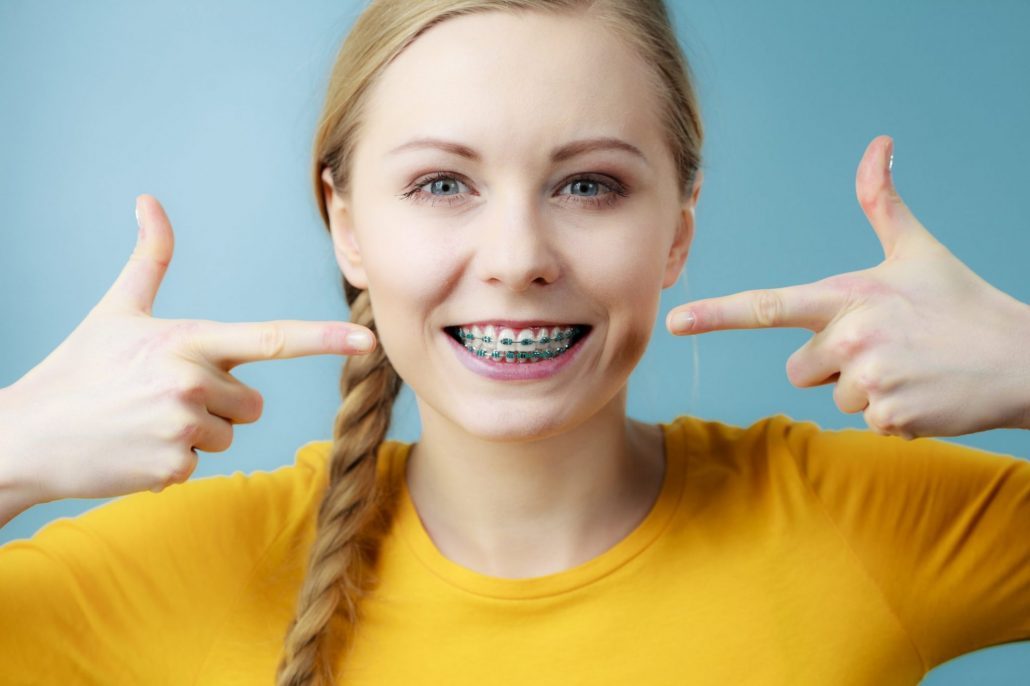
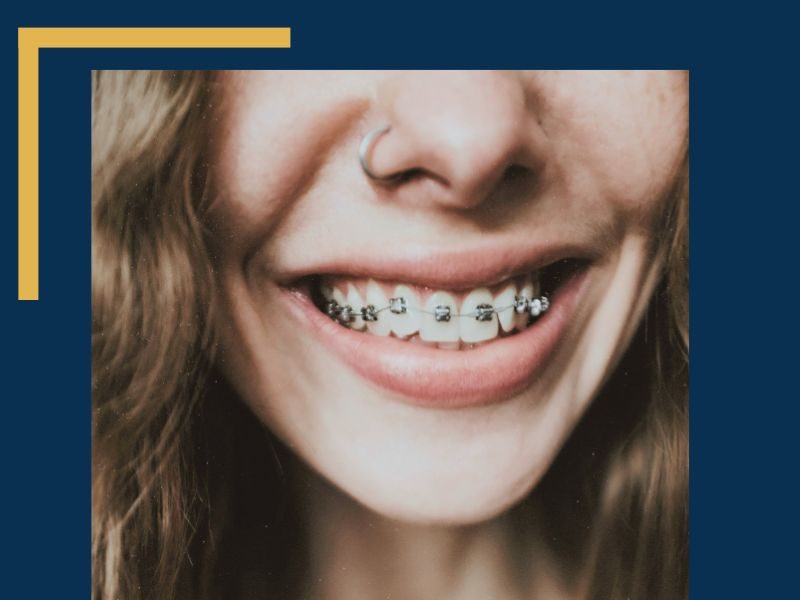
For many, the look of their braces is a top priority. If you’ve chosen ceramic braces for their discreet look, or if you’ve opted for vibrant blue braces to show off your style, your diet plays a role in how they look.

The Stain Strategy

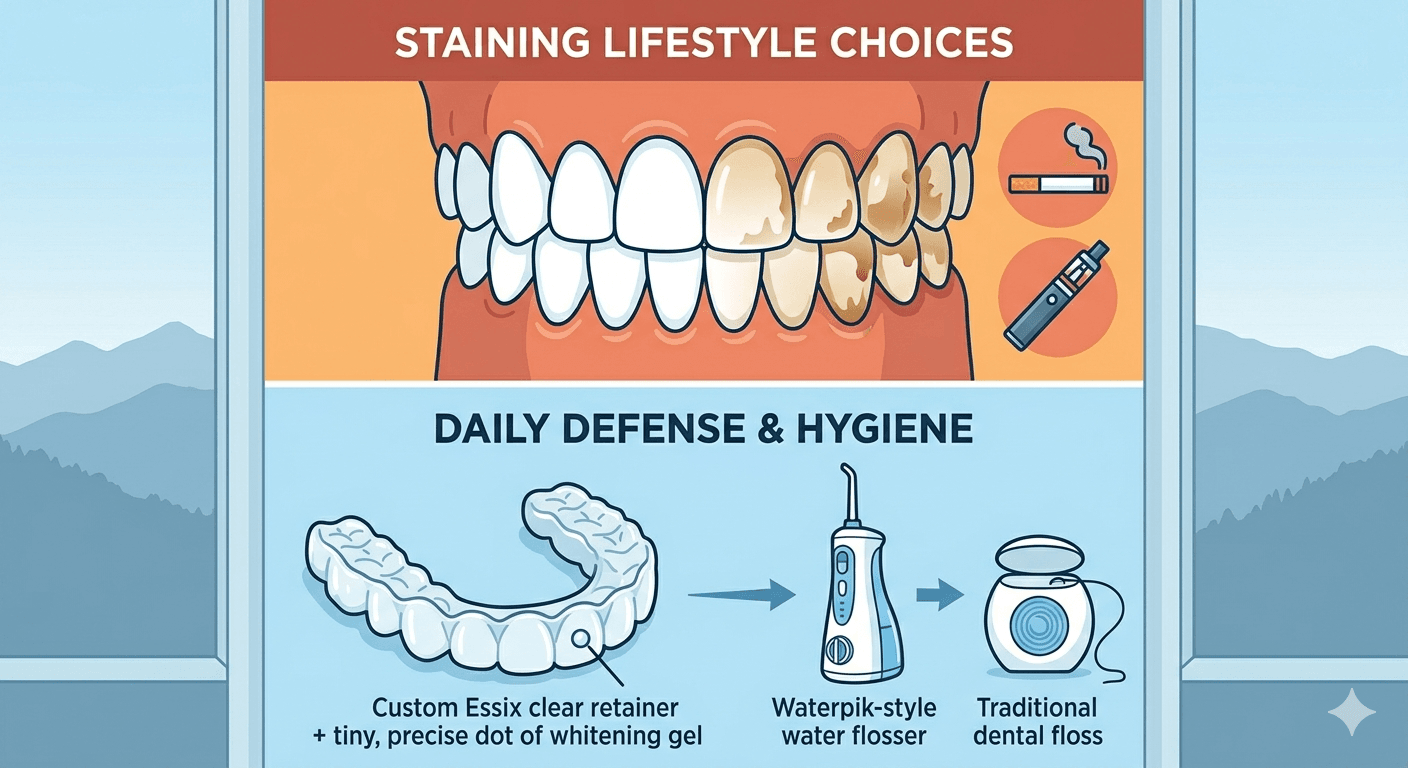
The American Dental Association (ADA) points out that while the brackets themselves (especially ceramic) are highly stain-resistant, the clear elastic “ties” that hold the wire in place are porous.

  • Foods that Stain: Mustard, turmeric, dark coffee, red wine, and beets.

  • The Fix: If you consume these, rinse your mouth with water immediately. If you have clear or white ties on ceramic braces, these pigments can turn them yellow or neon green almost instantly.

Oral Hygiene Instructions

The White Diet: For Those Concerned About Staining

If you’re worried about keeping your braces and teeth looking their best, the “White Diet” can help. This diet focuses on eating light-colored, non-staining foods, especially after adjustments or whitening treatments when your teeth are more porous and prone to discoloration.

Foods to Enjoy on the White Diet

  • Proteins: Chicken breast (no skin), white fish, tofu, and egg whites.
  • Carbs: White rice, plain pasta (no red sauce), and peeled potatoes.
  • Dairy: Milk, plain yogurt, and white cheeses like mozzarella or feta.
  • Snacks: Rice cakes, plain crackers, and vanilla pudding.

Foods to Avoid

  • Dark Beverages: Coffee, black tea, red wine, and dark sodas.
  • Pigmented Sauces: Soy sauce, balsamic vinegar, and tomato-based pasta sauces.
  • Brightly Colored Foods: Beets, blueberries, and anything with artificial coloring.

By sticking to the White Diet, you can help prevent staining and keep your braces and teeth looking fresh throughout your treatment.

Hygiene Braces travel kit

Preventing Gum Inflammation

Sugary and starchy foods (like white bread and soda) create a “glue” that sticks to your brackets. If not cleaned away with a dedicated floss for braces, this leads to swollen, puffy gums. Highly inflamed gums can actually grow over your brackets, making adjustments painful and slowing down tooth movement.

Life Hacks for Braces Eaters

  1. The “Knife and Fork” Rule: You can eat many “forbidden” foods if you change how you eat them. Slice apples into thin wedges. Cut corn off the cob. Quarter your pizza slices and eat them with a fork.

  2. The Temperature Check: Avoid extremely hot foods immediately after an adjustment. Lukewarm or cool foods are much more soothing.

  3. Hydration is Hygiene: Drinking water while you eat helps “power wash” food particles out of your wires before they have a chance to settle.

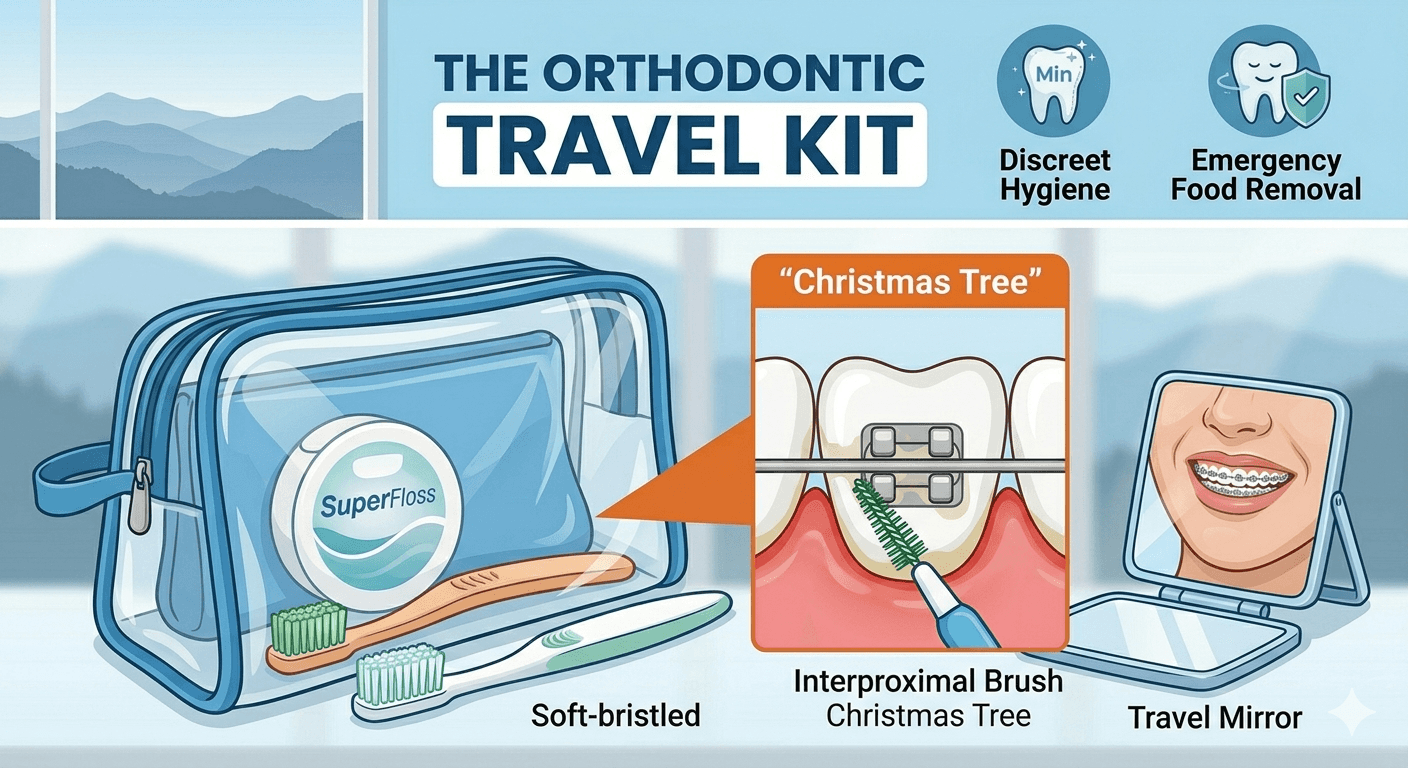
  4. The Travel Kit: Always carry an interproximal brush (the “Christmas tree” brush). It is your best friend when you’re out at dinner in Asheville and realize you have a piece of spinach caught in your blue braces.


Blue Ridge Orthodontics invisalign

Is Invisalign a Better Option for You?

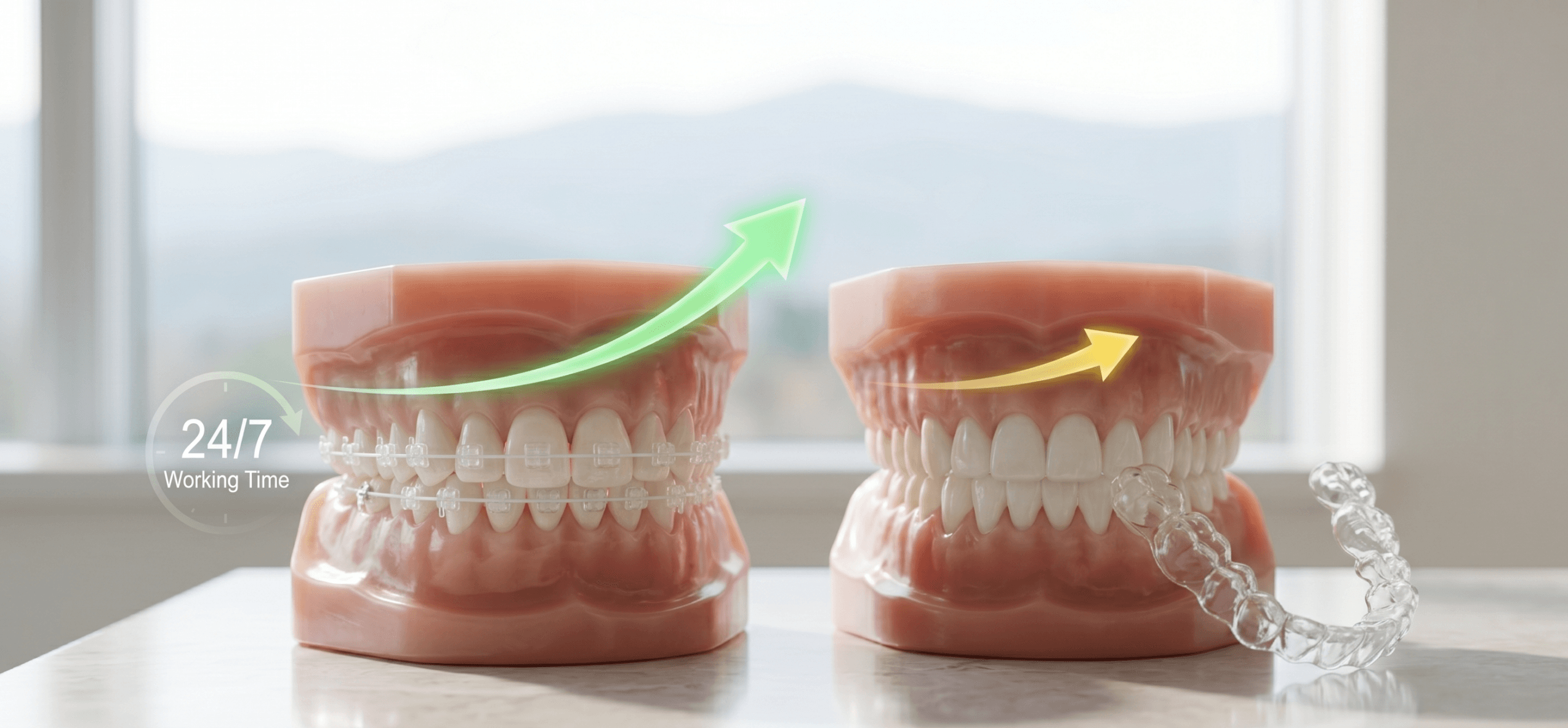
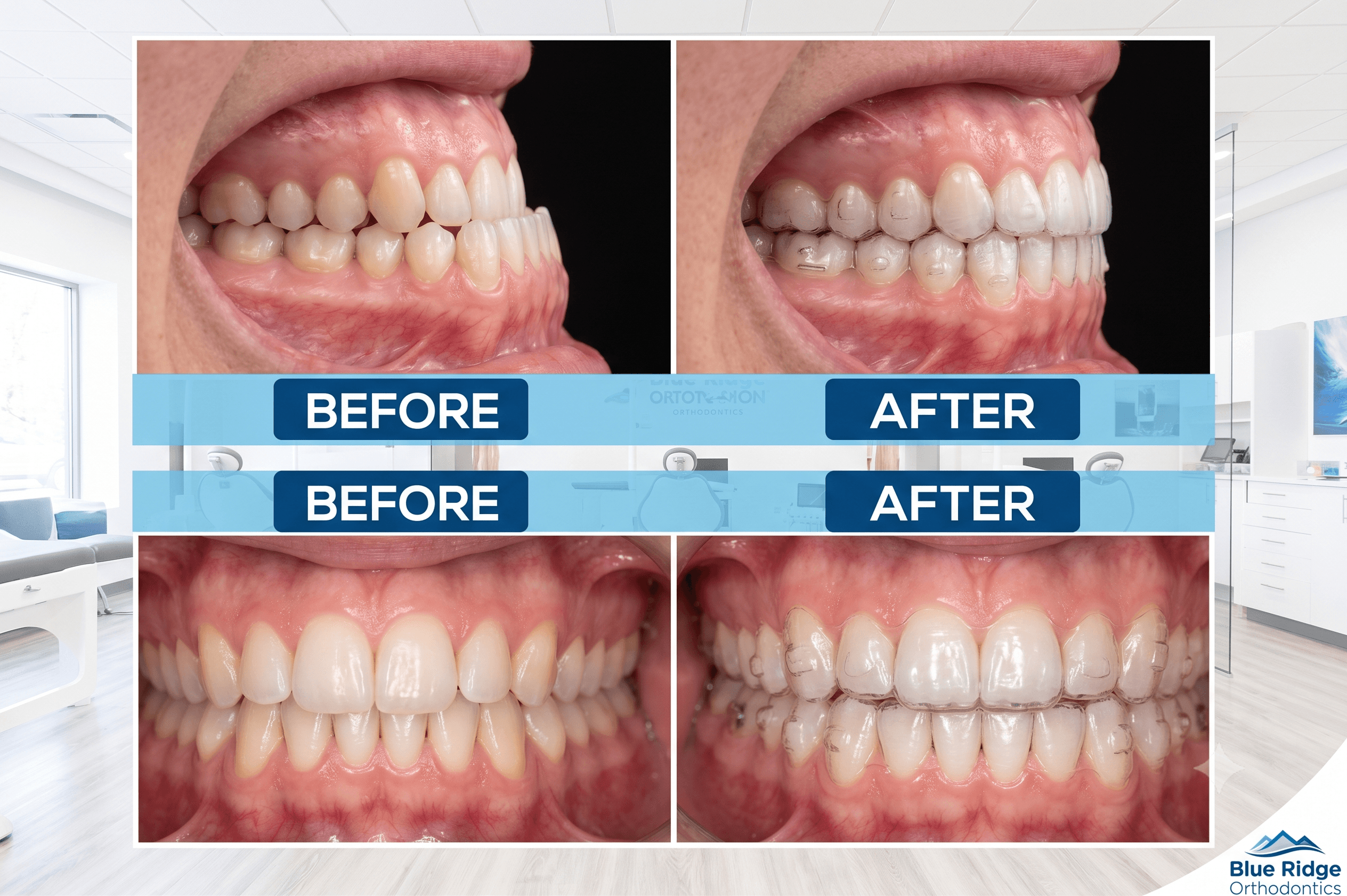
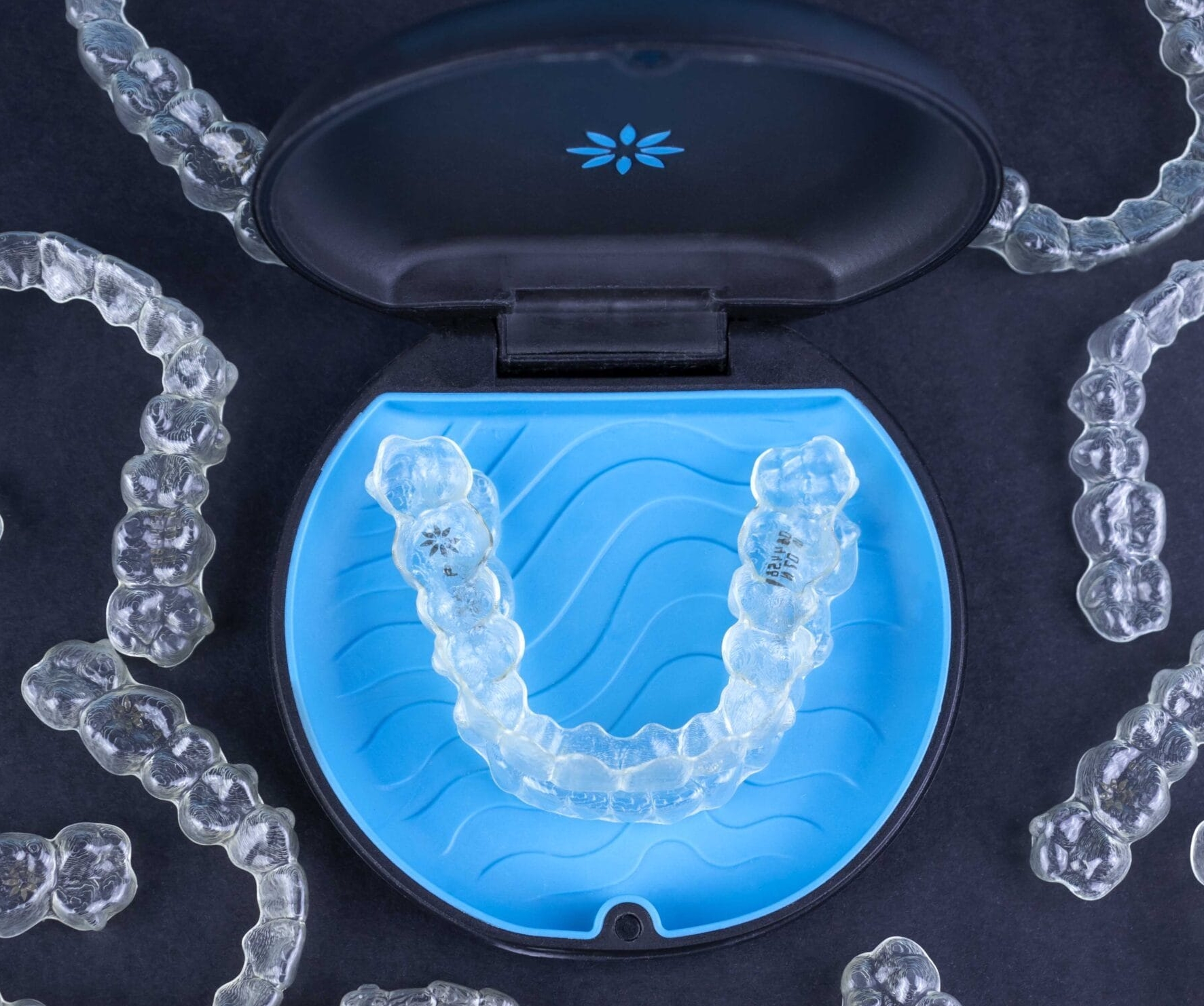
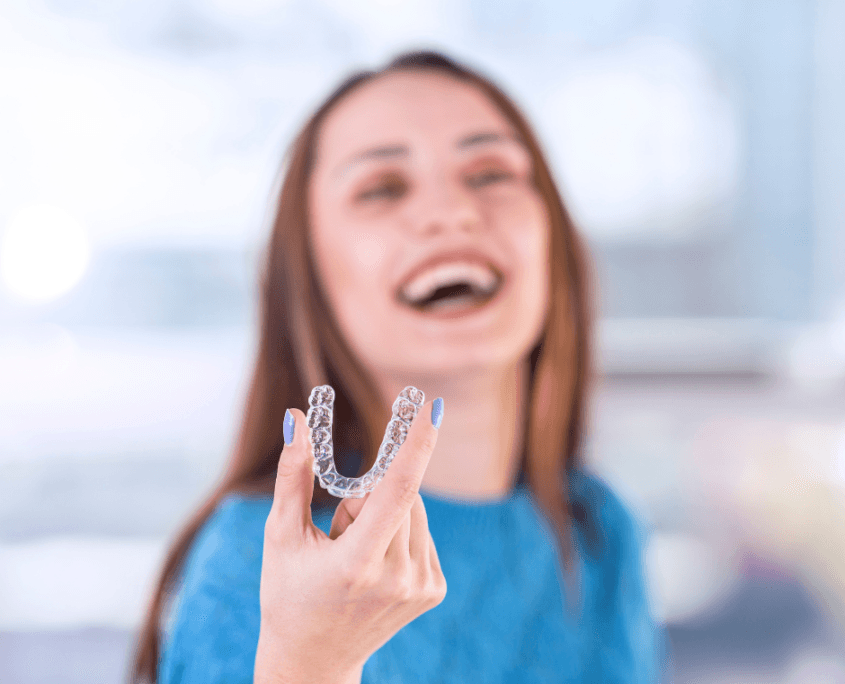
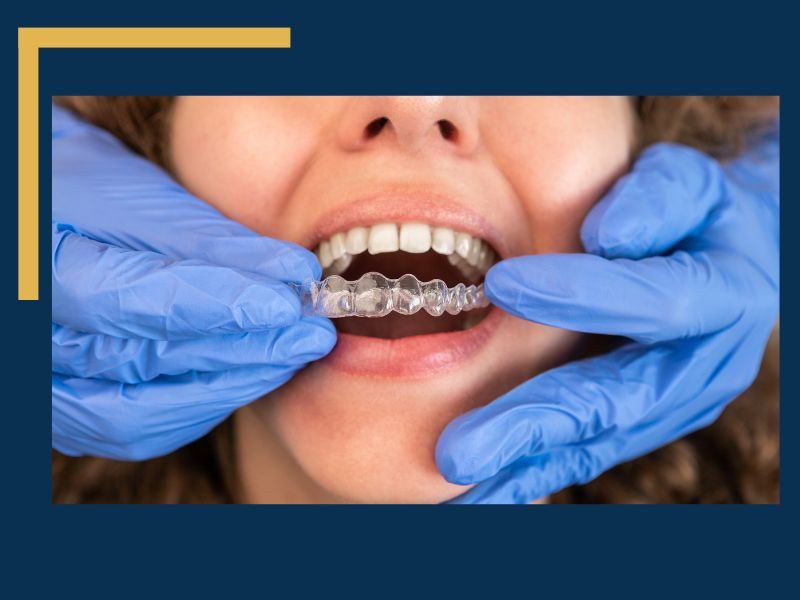
If the idea of restricted eating feels overwhelming, Invisalign might be your perfect match. Because Invisalign aligners are removable, there are zero food restrictions. You simply pop them out, enjoy your meal, brush your teeth, and pop them back in.

Many adults choose Invisalign specifically for this freedom. However, if you prefer the “set it and forget it” nature of fixed hardware, our team will ensure you have all the tools—from wax to specialized floss for braces—to make your journey comfortable.

Your Smile Transformation Starts Here

Let’s face it—a great smile is about so much more than straight teeth. It’s about feeling confident, laughing without hesitation, and letting your true self shine. At Blue Ridge Orthodontics, we’re here to help you achieve that.

We combine cutting-edge technology with a warm, personalized approach that puts you in control of your journey. You’re not just another patient to us—you’re a partner in designing a smile you’ll love. Whether you’re exploring adult braces for yourself or seeking top-notch care for your child, we’re dedicated to delivering results that look incredible and feel even better.

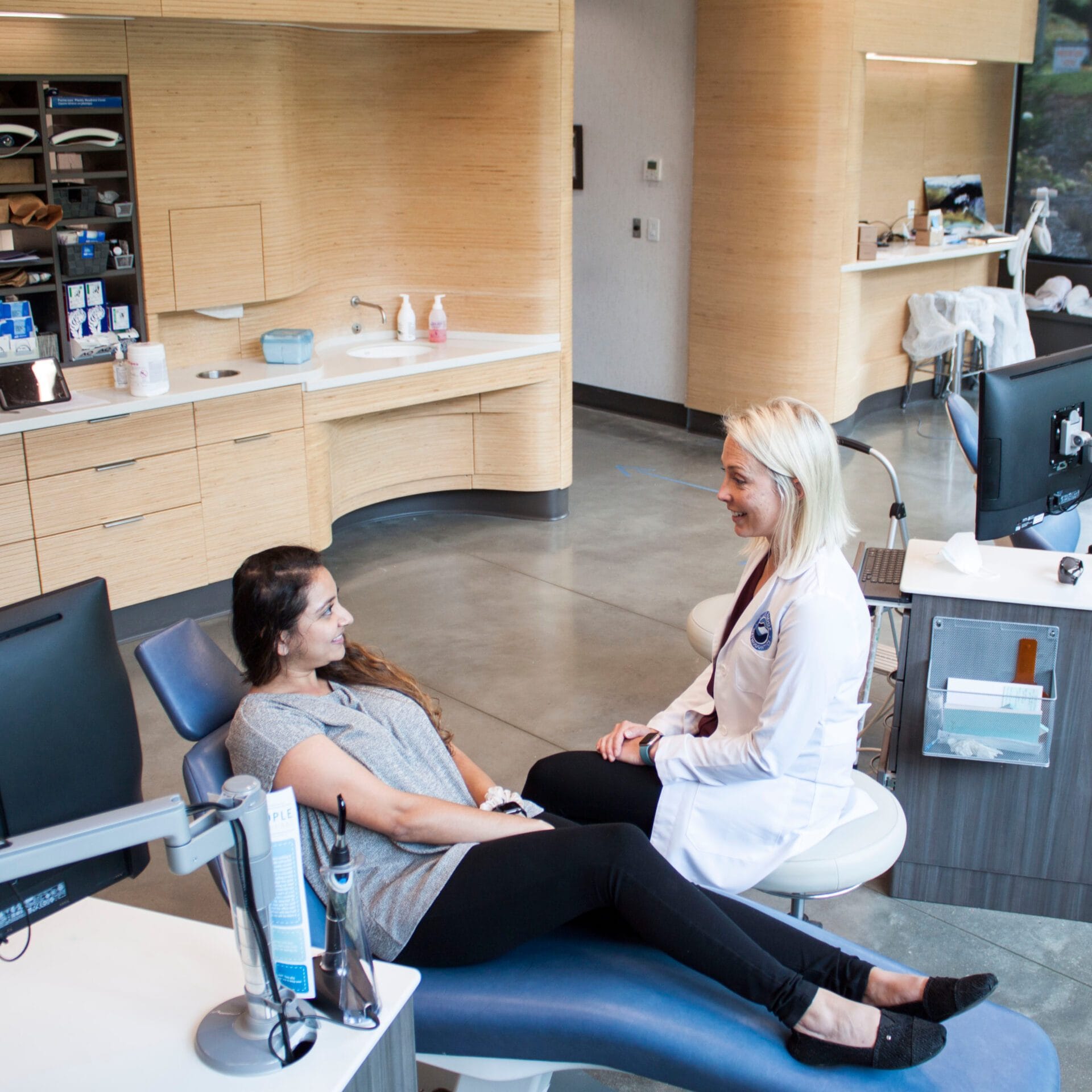
Office Visit

Ready to begin your journey? Discover what makes the BRO experience truly unique.

Visit us at one of our Three Convenient Locations in Western North Carolina

1. Asheville Dental Office Location

Tel: 828.407.1417


2. Brevard Dental Office Location

Tel: 828.537.5364

3. Hendersonville Dental Office Location

Tel: 828.537.5403

If you’re interested in this topic, you may also like:

Ready to start your transformation? Visit us in Asheville, Brevard, or Hendersonville! Schedule your consultation today!


The Ultimate Guide to Brushing and Flossing Your Teeth with Braces

Maintaining a pristine smile while navigating a mouth full of hardware is a challenge that every orthodontic patient understands. We know that the first few days after you get your braces can feel like you’re learning how to use your mouth all over again, especially when it comes to the simple act of brushing. At Blue Ridge Orthodontics, we don’t just want you to have straight teeth; we want you to finish your treatment with healthy enamel and vibrant gums that are ready for their debut.

Oral Hygiene with Braces

When food particles and plaque settle around brackets, they create a sticky film called biofilm. If left undisturbed, the bacteria in this film produce acids that leach minerals from your teeth, leading to permanent white scars known as decalcification. To prevent this, you need more than just a toothbrush—you need a strategy.


The Triple-Threat Brushing Technique

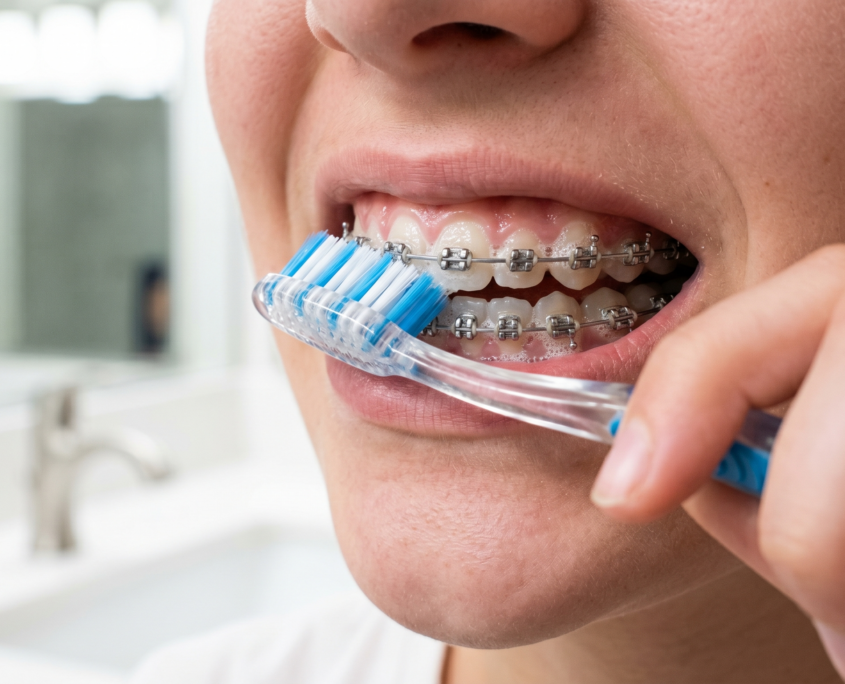
Standard brushing involves cleaning the front, back, and chewing surfaces. With orthodontics, you have to account for the “shelves” created by your brackets. To ensure total coverage, we recommend the following 45-degree angle method:

Step 1: The Gravity Rinse

Before you even apply toothpaste, rinse your mouth vigorously with water for 30 seconds. This acts as a “pre-wash,” dislodging large debris like bread or leafy greens that have become entangled in your wires.

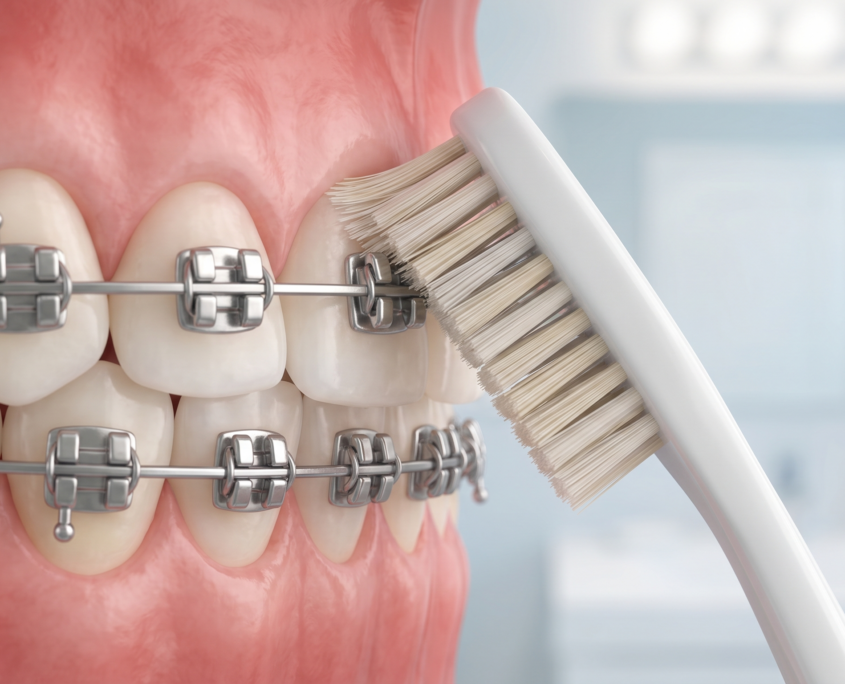
Step 2: The High Angle (Above the Wire)

Tilt your brush at a 45-degree angle pointing downward toward the floor. Focus on the space between the top of the bracket and your gum line. Use gentle, circular motions to sweep plaque out from under the gingival margin.

The Low Angle (Below the Wire)

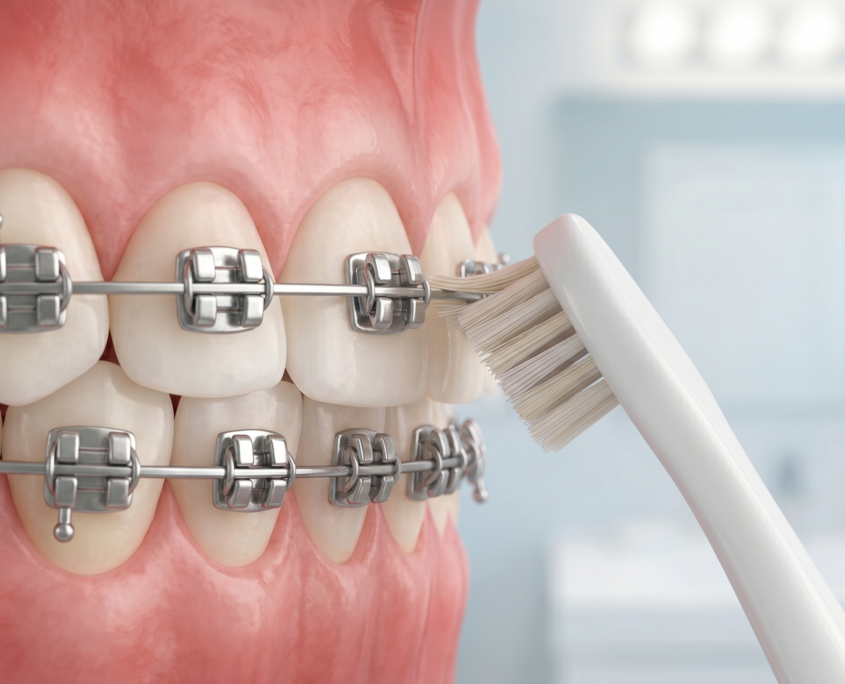
Step 3: The Low Angle (Below the Wire)

Angle your brush at 45 degrees pointing upward toward the ceiling. This cleans the underside of the bracket and the area where the tooth meets the wire. This is a high-traffic area for plaque, so take your time here.

The Low Angle (Below the Wire)

Step 4: The Direct Approach

Finally, brush directly over the brackets and wires using wide, circular motions to polish the metal and the front of the teeth. Finish by cleaning the “hidden” inside surfaces and the biting edges.

The Mirror Check: After you finish, stand in a well-lit area and inspect your smile. Your metal or ceramic braces should be shiny and the tooth surface should look polished. If the hardware looks dull or “fuzzy,” that is a sign of remaining plaque.


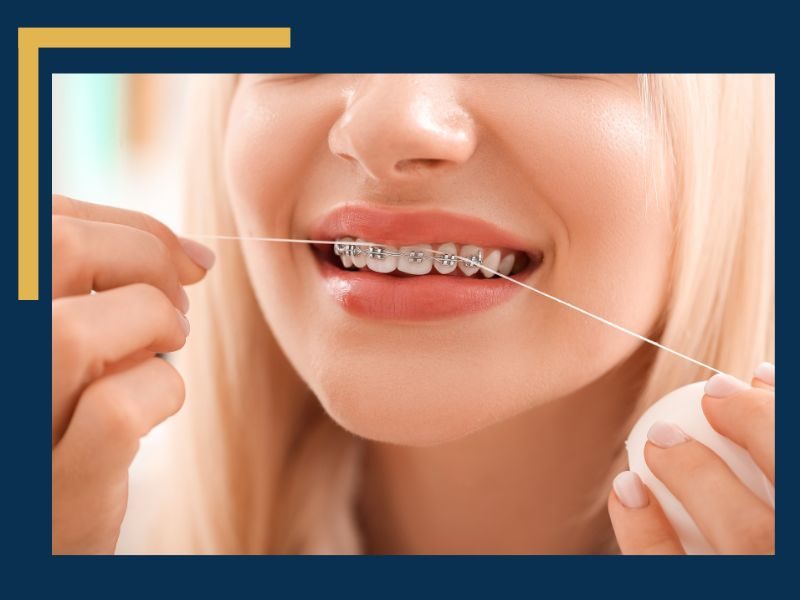
How do I Floss with Braces - young girl with braces and flossing with dental floss

The “Floss for Braces” Survival Guide

If brushing is the “wash,” then flossing is the “detail work.” Many patients find flossing so tedious that they skip it, but this is where 80% of orthodontic cavities begin. Using traditional floss for braces requires a bit of mechanical help.

Hygiene Tool Comparison Table

ToolPurposeHuman BenefitProfessional Rating
Floss ThreaderLoops floss under the archwire.Cheap and portable; great for travel kits.⭐⭐⭐
Water FlosserUses pressurized water to “power wash” gaps.Feels like a massage for sore gums; very fast.⭐⭐⭐⭐⭐
Interproximal BrushSmall “tree” brush for under-wire cleaning.Perfect for removing that one stubborn piece of lunch.⭐⭐⭐⭐
SuperFlossPre-cut stiff-end floss.Eliminates the need for a separate threader.⭐⭐⭐⭐

The Aesthetic Impact of Hygiene

For many of our patients, the look of their treatment is part of their identity. If you have opted for ceramic braces, keeping them clean is vital because while the brackets themselves don’t stain, the clear elastics holding the wire in place certainly can. Coffee, mustard, and tomato sauce can quickly turn a discreet look into a discolored one.

Conversely, if you’ve chosen bold blue braces or other vibrant colors, high-level hygiene keeps those colors popping against bright, white enamel. Plaque buildup can make even the most stylish colors look dingy.


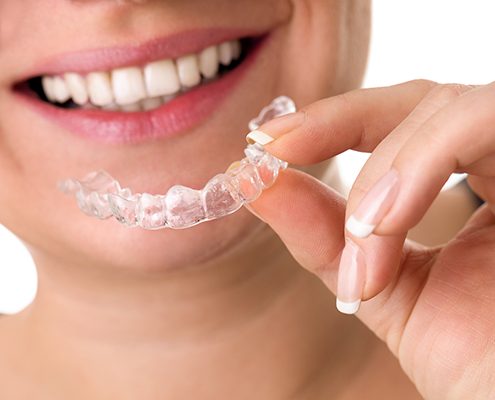
smiling female holding invisible teeth braces


The Adult Perspective: Invisalign vs. Braces

We find that many of our adult braces patients are particularly concerned about the time commitment required for hygiene. If your lifestyle involves frequent business lunches or travel, the braces routine might feel cumbersome.

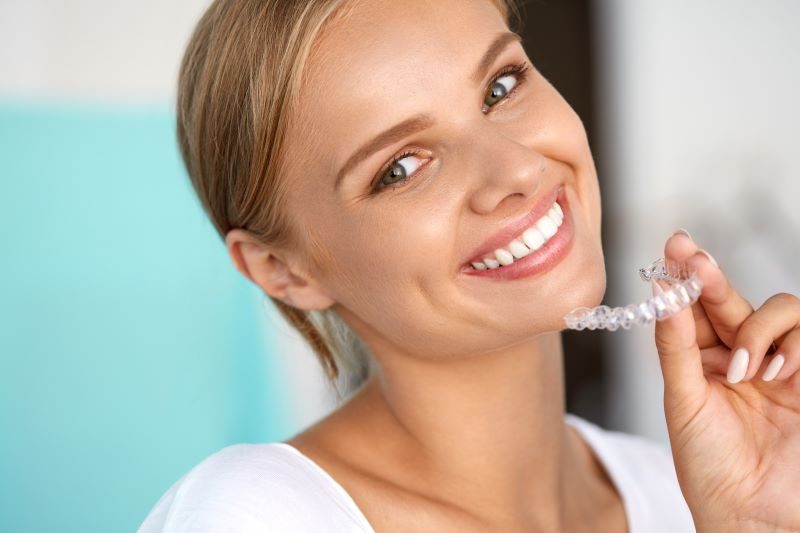
This is where Invisalign offers a massive advantage. Because the aligners are removable, you can maintain your pre-orthodontic hygiene routine. You simply pop the trays out, brush and floss normally, and pop them back in. Regardless of which path you choose, the end goal remains the same: a healthy, stable smile. Once you finish your treatment, maintaining your Retainer will require similar (though much simpler) cleaning habits.


Office Consultation

If you’re interested in this topic, you may also like:

Building a perfect smile is a journey that involves science, patience, and a bit of “inside info.” To ensure you are fully prepared for every stage of your transformation, explore these related deep-dives:

Ready to start your journey to a healthier smile? Schedule a consultation at Blue Ridge Orthodontics today!

The Big Reveal: What to Expect When Getting Your Braces Removed

,

The day you’ve been dreaming of since your very first schedule a consultation appointment is finally here: Debonding Day. Whether you’ve spent 12 months or 24 months in braces, the anticipation of seeing your new smile for the first time is a major milestone. At Blue Ridge Orthodontics, we want this day to be as seamless and celebratory as possible. To help calm your nerves and satisfy your curiosity, here is exactly what happens when the brackets finally come off.

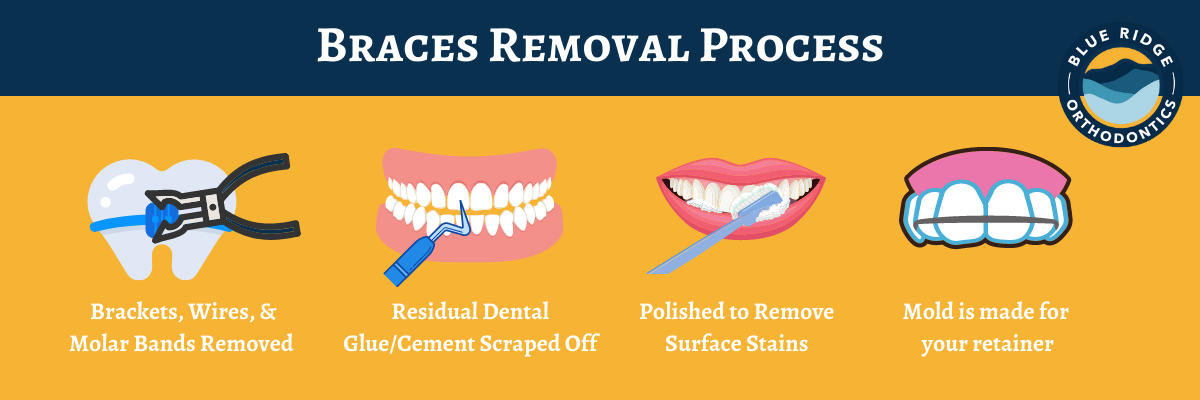
Braces Removal Process


Step 1: The “Pop” (Removing the Brackets)

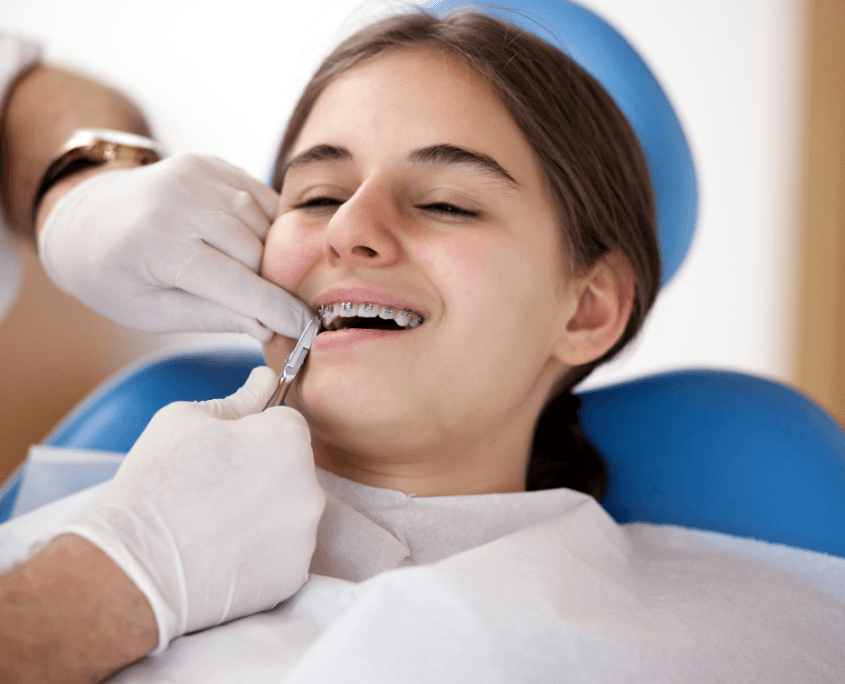
Many patients worry that removing braces will be painful, but it is actually a very simple mechanical process. Our orthodontic assistants use specialized pliers to gently squeeze the base of each bracket. This breaks the adhesive bond, and the bracket “pops” off the tooth.

What it feels like: You will feel a bit of pressure, but it isn’t painful. You might even hear a little “click” or crunching sound—that’s just the bond breaking, not your tooth!

Step 2: Polishing Your New Smile

Once the brackets are gone, you’ll notice a little bit of “cement” or adhesive left behind on your teeth. We use a high-speed polishing tool to gently buff away this glue.

This is the part that truly transforms your look. We ensure that every tooth is smooth and that any plaque buildup around the old bracket sites is removed. Your teeth might feel a bit slimy or “too smooth” at first—that’s just because you haven’t felt your bare enamel in a long time!

Step 3: The Digital Scan (Say Goodbye to Putty)

To protect your investment, we need to ensure your teeth stay exactly where they are. Immediately after polishing, we will take a scan of your teeth to create your custom Retainer.

At BRO, we utilize iTero 3D digital scanners. This means no more gagging on cold, messy putty molds. We simply wave a digital wand over your teeth, and a perfect 3D model appears on the screen.


Expectations for Getting Your Braces Removed - young girl getting her braces off

How Does Removal Day Compare to Application Day?

Getting your braces removed is much faster and more comfortable than the day you got them put on. Here is a quick look at the differences:

“Bonding” vs. “Debonding”

FeatureApplication Day (Bonding)Removal Day (Debonding)
Duration60–90 Minutes30–45 Minutes
SensationFeeling of “tightness” beginsImmediate feeling of lightness
After-EffectSensitivity to hard foodsSensitivity to air/cold for 24 hours
DietSoft foods for 3–5 daysYou can finally eat that “forbidden” list!

Step 4: Life After the Reveal

While you are free to celebrate with the sticky or crunchy foods you’ve been missing, there are three things to keep in mind during your first week:

  1. Sensitivity: Your enamel hasn’t been exposed to the air or cold drinks for a long time. It’s normal for your teeth to feel a bit sensitive for a few days.

  2. Gum Health: If you struggled with flossing during treatment, your gums might be a little puffy. Regular brushing and flossing will bring them back to normal quickly.

  3. The “Ghost” Brackets: You might find yourself still trying to “tuck” your lip over brackets that are no longer there! Your mouth needs a few days to adjust to its new shape.

Invisalign for Adults

Adults and Clear Alternatives

If you are an adult who is just starting to consider treatment and are worried about the “metal look,” remember that adult braces have come a long way. Many of our patients choose Invisalign specifically because there is no “Removal Day”—you simply finish your last tray and move straight into your retainer phase!


If you’re interested in this topic, you may also like:

Your journey doesn’t end when the braces come off. Explore these related guides to ensure your new smile lasts a lifetime:

Ready to reveal your best smile? Schedule your complimentary consultation at Blue Ridge Orthodontics today!

BROR Monthly Special

10 Surprising Facts About Braces: What Every WNC Patient Should Know

Let’s be honest: the idea of getting braces can feel a bit overwhelming. You’re likely wondering if it will hurt, how you’ll look in photos, and if you’ll ever be able to eat popcorn again. At Blue Ridge Orthodontics, we’ve helped thousands of neighbors in Asheville, Brevard, and Hendersonville navigate these exact feelings.

Orthodontics isn’t just about moving teeth; it’s about a biological transformation that boosts your health and your confidence. To help you feel like an expert before you schedule a consultation, here are 10 facts that move beyond the surface.


Debunking Myths about Wisdom Teeth and Braces - young girl with brances

1. Braces Are a Masterpiece of History & Modern Tech

It’s easy to think of orthodontics as a modern invention, but humans have been striving for straight smiles for millennia. Archaeologists have found ancient mummies with metal bands wrapped around their teeth.

The “human” side? We’ve spent 2,000 years perfecting this because a confident smile has always been a universal symbol of health and happiness. Today, we’ve traded “catgut” cords for space-age alloys developed by NASA, making the process faster and more comfortable than ever.

2. Your Braces Have “Biological Memory”

The wires we use aren’t just ordinary metal. They are made of nickel-titanium, a material that “remembers” its original shape. When we place the wire in your mouth, your natural body heat activates it. The wire then gently and consistently tries to return to its perfect U-shape, taking your teeth along for the ride.

3. It’s About Your Whole Body, Not Just Your Smile

Many patients come to us wanting “straight teeth,” but we are actually looking at your occlusion (your bite). If your teeth don’t meet correctly, it can lead to chronic headaches, jaw pain (TMJ), and uneven wear on your enamel. Correcting your bite is an investment in your long-term physical health, not just your reflection.

Braces Info

4. You Are Never Too Old for a Transformation

If you think you missed the boat because you aren’t a teenager anymore, think again. Adult braces are one of the fastest-growing segments of our practice. Whether you’re a professional in downtown Asheville or a retiree in Hendersonville, your bone structure can still be guided into a healthier position.

Modern Treatment Comparison

FeatureTraditional MetalCeramic Braces
MaterialStainless SteelTranslucent Porcelain
AestheticsClassic & DurableDiscreet & “Nearly Invisible”
Best For…Athletes & Complex CasesAdults & Image-Conscious Professionals
CustomizationUnlimited Color TiesUsually Clear or Tooth-Colored Ties

5. You Can “Hide” Your Treatment with Ceramic Braces

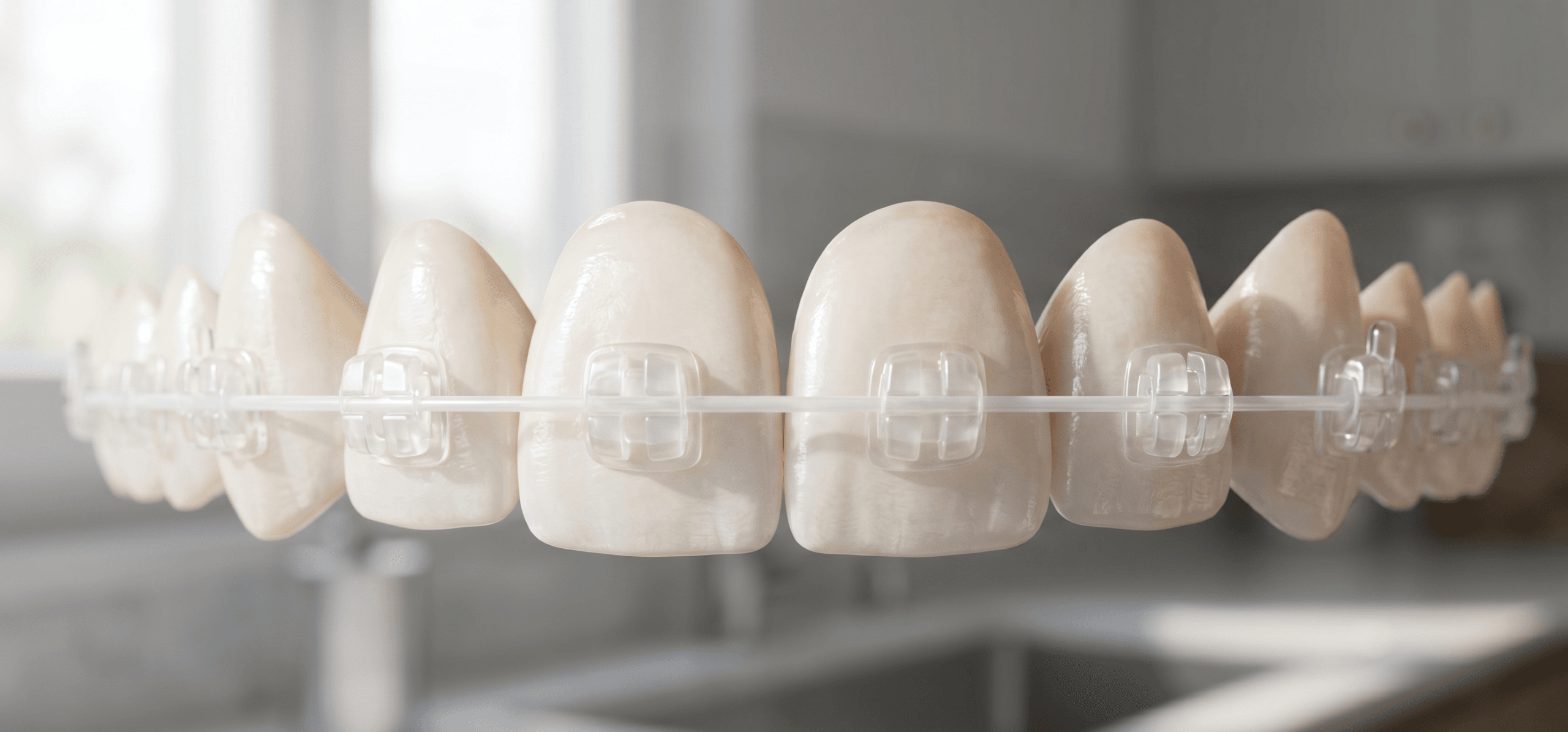
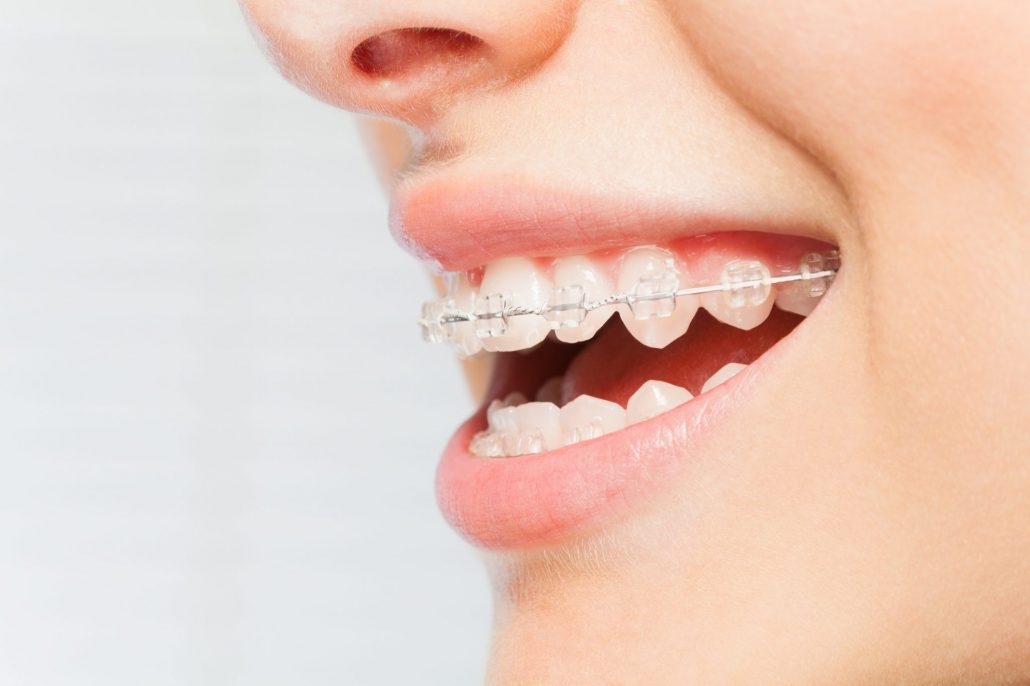
For those who want the mechanical power of traditional treatment without the high-profile look of metal, ceramic braces are the answer. They use the same system of wires and brackets, but the brackets are made of a ceramic material that matches the shade of your teeth. From a few feet away, most people won’t even realize you’re wearing them.

6. You Can Make a Fashion Statement (Blue Braces!)

On the flip side, many of our younger patients (and even some fun-loving adults) treat their treatment like an accessory. You can choose from dozens of colors for your elastic ties. Blue braces are a perennial favorite because they tend to make your teeth look even whiter! You can change your color at every adjustment to match holidays or school colors.

Invisalign for Teens - image of someone getting Invisalign put into their mouth

7. Invisalign: The Removable Alternative

If you want to skip brackets and wires entirely, Invisalign may be the perfect fit. These clear, removable aligners offer a lifestyle of flexibility—you can eat what you want and brush your teeth normally. At BRO, we are a Diamond+ Top 1% provider, meaning we handle even the most complex Invisalign cases with precision.

8. Hygiene Requires a New “Toolkit”

Keeping your teeth clean is the most important “job” you have during treatment. Because food particles love to hide behind wires, you’ll need to master the art of using specialized floss for braces. Using a floss threader or a specialized water flosser is essential to prevent “white spots” (decalcification) from forming under the brackets.

9. Your Teeth Move Through “Bone Remodeling”

This is the biological magic of orthodontics: your teeth aren’t actually “stuck” in your jawbone like nails in a board. They are held in place by a living ligament. When pressure is applied, one side of the bone “dissolves” (resorption) while new bone grows in behind the tooth (deposition). This is why your teeth might feel slightly wiggly during treatment—it’s just the bone being “remodeled” into a better position!

Dental bone remodeling


10. The “Finish Line” is the Protection Phase

The most important fact we tell our patients is that your teeth have “memory.” To keep your smile perfect after your treatment is finished, you must wear your Retainer as prescribed. This custom appliance holds your teeth in their new home while the surrounding bone and ligaments fully stabilize.


If you’re interested in this topic, you may also like:

We’ve created a library of resources to help you feel confident throughout your entire orthodontic journey. Explore these related guides:

Blue Ridge Orthodontics office location


Ready to transform your smile? Schedule your complimentary consultation at Blue Ridge Orthodontics today!