Metal and clear ceramic braces for kids, teens and adults, at the same price as Invisalign, from the orthodontists at Blue Ridge Orthodontics.
Braces are still the most versatile tool in orthodontics. They handle the cases aligners can’t, they don’t depend on anyone remembering to wear them, and modern brackets are smaller and more comfortable than the ones most parents remember. If you or your child needs them, here’s what to expect from us.
More people than you’d think. In the national NHANES III survey, only about a third of U.S. adults had well-aligned lower front teeth, and roughly 15% had crowding severe enough to affect function (Proffit et al., 1998). Crooked teeth and bad bites rarely improve on their own, and most get harder to treat with time.
What braces fix
Alignment
Crowding, spacing, rotated or protruding teeth.
Bite
Overbite, underbite, crossbite and open bite: the causes of jaw pain, clicking, uneven wear and chipped teeth.
Health
Straight teeth are easier to clean; crowded teeth trap plaque and are linked to more cavities and gum disease.
Kids. The American Association of Orthodontists recommends a first check by age 7. Most kids don’t need braces that young, but we can see jaw and eruption problems early, when a short first phase can prevent a much bigger second one. Pediatric orthodontics →
Teens. The classic braces age: all the adult teeth are in, the jaw is still growing, and treatment is fastest. Colors optional. Picking your braces colors →
Adults. About one in four orthodontic patients is now an adult (AAO). Adult bone moves a little more slowly, so treatment runs a few months longer, but there’s no upper age limit. Many adults choose ceramic. Adult orthodontics →
Metal vs. clear ceramic braces
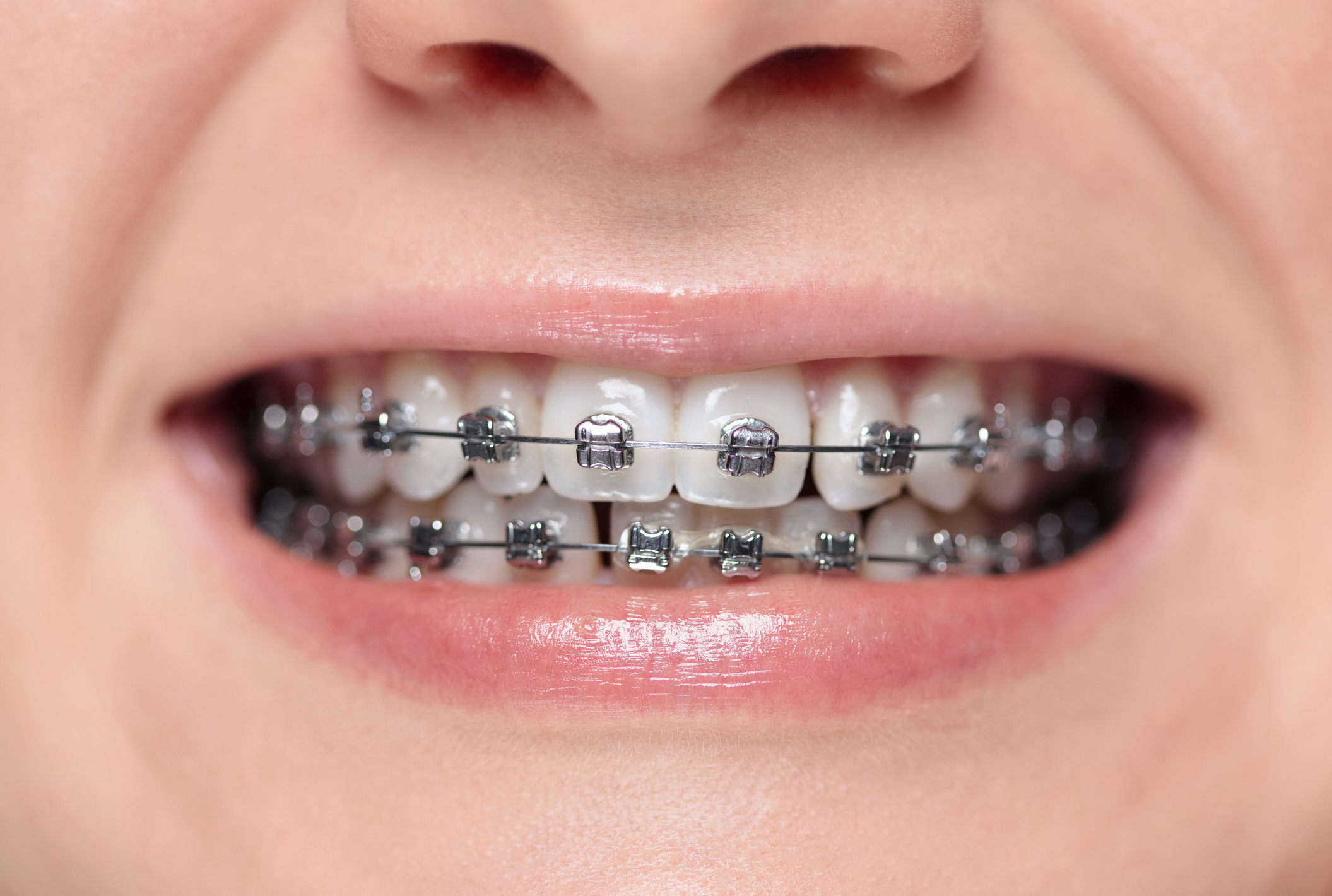
Traditional metal braces
Small stainless-steel brackets
Most durable option
Colored or clear bands, changed at each visit
Best for kids, teens, complex cases and contact-sport athletes
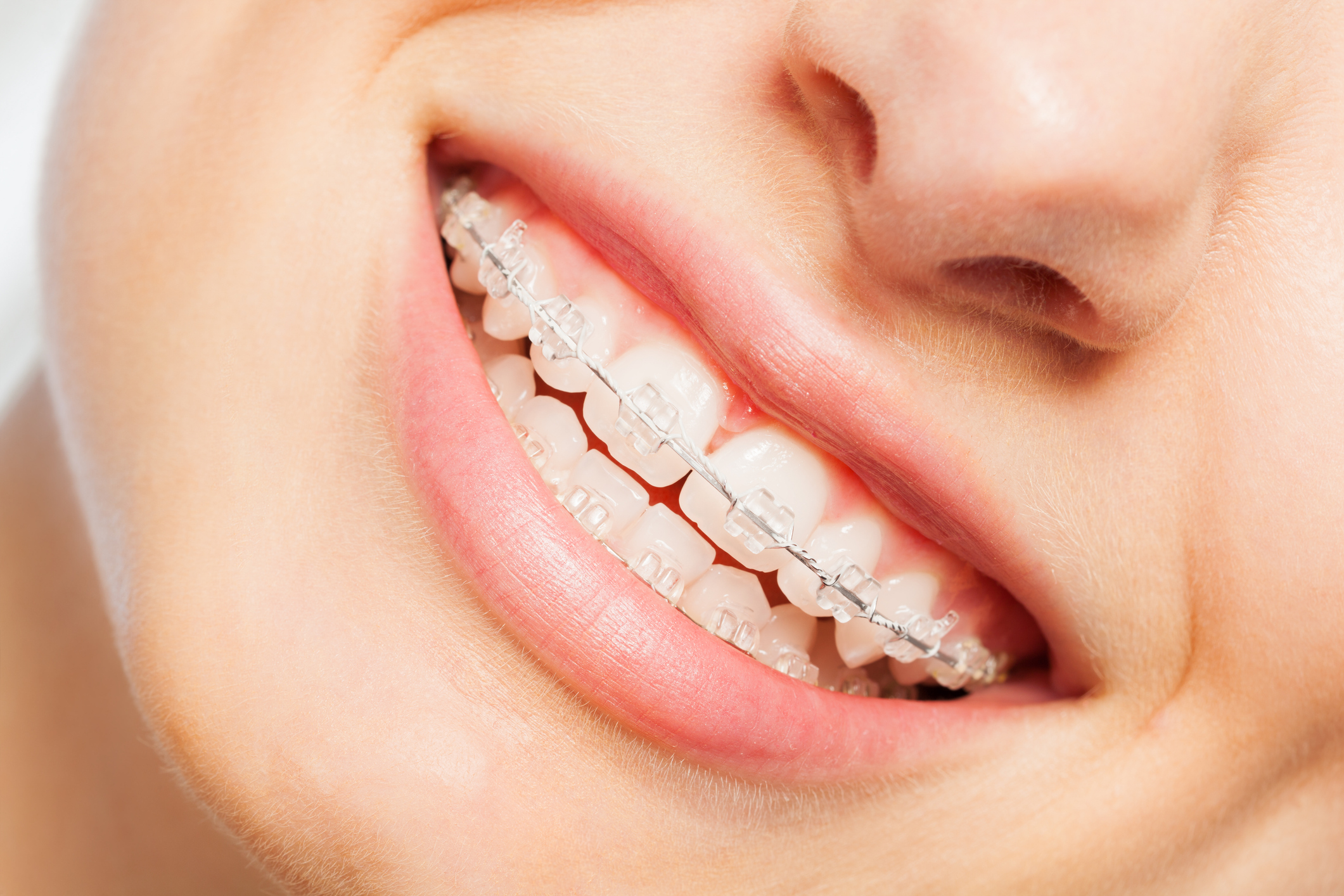
Clear ceramic braces
Tooth-colored or translucent brackets
Much less noticeable at conversation distance
Slightly larger and more brittle; a little more care with hard foods
Clear elastics can pick up color from coffee, tea and curry; we swap them every visit
Prefer no brackets at all? We’re a Diamond+ Invisalign provider, and for mild cases we offer Impressions at-home aligners. Your consult covers all of them.
How long do braces take?
The most careful answer in the literature comes from a 2016 systematic review of 25 clinical trials: the average course of fixed braces lasted 19.9 months, with about 18 visits (Tsichlaki et al., AJO-DO). That matches what we see: most BRO patients are in braces 18 to 24 months, with adjustments every 6 to 8 weeks.
What moves the number: how far teeth have to travel, whether the bite needs correcting as well as the alignment, how consistently elastics are worn, and how many brackets get broken. Early-treatment kids and simple alignment-only cases finish faster.
STEP 1
Free consult
About 1 hour. Photos, x-rays, exact price.
STEP 2
Braces on
About 90 minutes. No needles, nothing hurts.
STEP 3
Adjustments
Every 6 to 8 weeks for 18 to 24 months.
STEP 4
Braces off
Brackets removed, teeth polished.
STEP 5
Retainers
For life. Teeth drift at any age without one.
What getting braces on is like
The appointment takes about 90 minutes and nothing about it hurts:
We clean and dry your teeth.
A small amount of bonding adhesive goes on each tooth and the bracket is pressed into place.
A light cures the adhesive in seconds.
The archwire is threaded through the brackets and held with elastic bands, in your choice of colors or clear.
At Blue Ridge Orthodontics, braces and Invisalign are the same price, and the price depends on your case, not the appliance. Your free consultation ends with an exact written fee, your insurance benefit applied, and monthly payment options. Cost and financing →
It depends on the case; we give an exact price at your free consultation, and braces cost the same as Invisalign here. Our cost and financing page explains what’s included.
Do braces hurt?
Getting them on doesn’t. Teeth are sore for a few days afterward and for a day or two after adjustments.
What’s the best age for braces?
Most comprehensive treatment starts between 11 and 14, once the adult teeth are in. A first check by age 7 catches the cases that benefit from starting earlier.
Are ceramic braces as strong as metal?
They’re slightly more brittle, so we’d steer a contact-sport athlete toward metal, but for most patients the difference doesn’t matter.
Can adults get braces?
Yes. About a quarter of orthodontic patients are adults. Treatment takes a few months longer than for a teen.
Do I need a referral?
No. Book a free consultation directly at any office.
Tsichlaki A, Chin SY, Pandis N, Fleming PS. How long does treatment with fixed orthodontic appliances last? A systematic review. Am J Orthod Dentofacial Orthop. 2016;149(3):308-318.
Proffit WR, Fields HW, Moray LJ. Prevalence of malocclusion and orthodontic treatment need in the United States: estimates from the NHANES III survey. Int J Adult Orthodon Orthognath Surg. 1998;13(2):97-106.
American Association of Orthodontists. First orthodontic check-up by age 7; adults as a share of orthodontic patients. aaoinfo.org